
Last Updated: November 3, 2026
Quick Summary
Bee venom is not vegan, so any bee venom vegan serum falls outside a vegan lifestyle. It is an animal-derived ingredient produced by honeybees, and major vegan certification standards exclude insect-derived ingredients. Cruelty-free claims do not change this.
- Harvesting uses mild electrical stimulation, and bees sting a collection surface without losing their stinger.
- Cruelty-free means no animal testing, while vegan means no animal-derived ingredients at all.
- The Vegan Society's Vegan Trademark prohibits insect products, including honey, beeswax, and bee venom.
- Spilanthol from Acmella oleracea extract is the closest plant-based analog to bee venom's sensory effect.
- Patch test any bee venom product on your inner arm for 24 hours before committing.
Table of Contents
- The Short Answer: Bee Venom Is Not Vegan
- How Bee Venom Is Harvested and Why It Matters
- Cruelty-Free vs Vegan: Two Different Claims
- Bee Venom Skincare Benefits That Drive the Demand
- Copper Peptides vs Bee Venom: How the Two Compare
- Cruelty-Free Anti-Aging Alternatives for Vegan Shoppers
- Choosing Your Serum: Match the Formula to Your Values
- Frequently Asked Questions
The Short Answer: Bee Venom Is Not Vegan
Bee venom is not vegan. It is an animal-derived ingredient produced by honeybees, which means any bee venom vegan serum falls outside a vegan lifestyle. If you are asking whether bee venom is vegan, the honest answer is no, and no amount of marketing language changes that. This guide breaks down exactly why, then shows you how to decide whether that matters for your routine.
The confusion is understandable. Bee venom skincare is often marketed as natural, bee-friendly, and ethically harvested. None of those claims make it plant-based. Vegan means no animal inputs at all, and bees are animals.
Here is what most guides get wrong: they treat "cruelty-free" and "vegan" as synonyms. They are not, and the distinction decides whether bee venom belongs in your routine. Below, we explain how the ingredient is harvested, what it actually does for skin, and which alternatives deliver similar results for shoppers who want to stay plant-based.
How Bee Venom Is Harvested and Why It Matters
Harvesting bee venom is a mechanical process. Beekeepers use a mild electrical stimulation device placed at the hive entrance, which prompts bees to sting a collection surface without losing their stinger. The bees recover and return to the hive. The collected venom is then dried and purified into a powder.
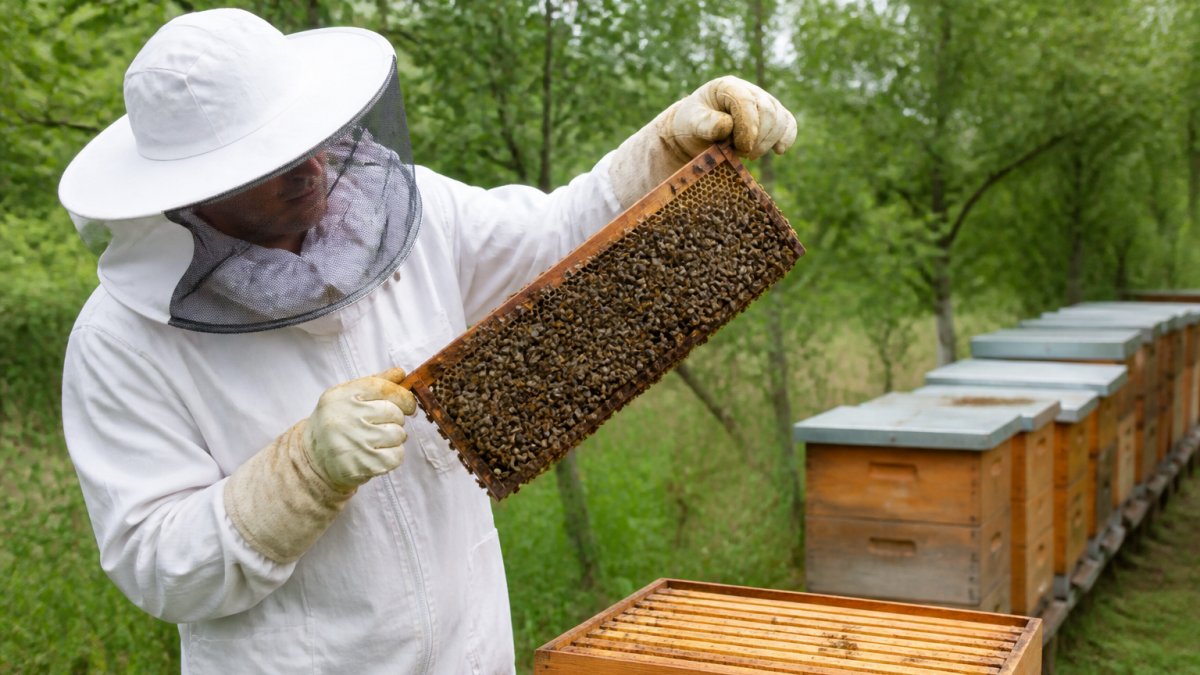
So the bees are not killed. That fact leads many brands to call the ingredient cruelty-free, and some argue it is sustainable. For a deeper look at safety and frequency, read is bee venom safe for daily use.
The environmental impact of apiculture is a second layer. Commercial beekeeping supports pollination but also concentrates hives in ways that can strain local ecosystems. Neither point makes bee venom vegan. Both matter if ethical sourcing drives your purchase.
Cruelty-Free vs Vegan: Two Different Claims
Cruelty-free means no animal testing was performed on the finished product or its ingredients. Vegan means the formula contains no animal-derived ingredients at all (Cruelty-Free vs Vegan: Why the Vegan Trademark is the gold standard in beauty). A serum can be cruelty-free and still contain bee venom, honey, or beeswax.
That gap is where most shoppers get tripped up. A label reading "cruelty-free" tells you nothing about whether an ingredient came from an animal. Only a vegan certification confirms the full formula is plant-based.
The certification layer is where the confusion gets worse, because most programs were built for mammals, not insects. Here is how the major verification routes treat bee venom:
- Leaping Bunny (Cruelty Free International): This program certifies that no animal testing occurred at any stage of production. It does not certify that ingredients are animal-free. A bee venom serum can carry the Leaping Bunny mark because the bees are not tested on, even though the venom is animal-derived. The program's vegan verification is a separate add-on, and a brand must opt into it.
- Vegan Trademark (The Vegan Society): This is the strictest common standard for ingredient origin. It prohibits all animal-derived ingredients, and the organization has publicly stated that insect products, including honey, beeswax, and bee venom, do not qualify. A product carrying this mark cannot contain bee venom.
- Certified Vegan (Vegan Action): Similar in intent to the Vegan Society mark, this program verifies no animal-derived ingredients and no animal testing. Insect-derived inputs are excluded.
- PETA's Beauty Without Bunnies: Offers both a cruelty-free and a vegan listing. The vegan listing excludes animal-derived ingredients, but the cruelty-free listing does not, so the two badges are not interchangeable.
Watch out: a brand can display a cruelty-free badge and a "bee-friendly" sourcing claim side by side, and neither one tells you the formula is vegan. The only reliable signal is a certification whose published standard explicitly excludes insect-derived ingredients.
- Cruelty-free: no animal testing
- Vegan: no animal ingredients and no animal testing
- Bee venom: animal-derived, so never vegan under any major vegan certification standard
If plant-based skincare is your standard, look for an explicit vegan certification rather than trusting a cruelty-free badge. When in doubt, read the certifying body's published ingredient standard, not the front of the box.
Bee Venom Skincare Benefits That Drive the Demand
Bee venom is often nicknamed "nature's botox" in marketing. The venom contains melittin, a compound that triggers a controlled wound healing response.
One caveat: the same wound healing response that drives results can trigger reactions in reactive skin. If your skin reddens easily, read bee venom serum for sensitive skin before you commit. Patch testing is not optional for first-timers.
Copper Peptides vs Bee Venom: How the Two Compare
Copper peptides and bee venom are two different ingredients that appear together in this serum.
| Feature | Copper Peptides | Bee Venom |
|---|---|---|
| Origin | Synthetic peptide complex | Animal-derived |
| Vegan status | Typically vegan | Never vegan |
| Primary action | Barrier repair, collagen support | Wound healing response |
| Best for | Firmness, texture refinement | Fine lines, pore appearance |
| Sensitivity risk | Low | Higher for reactive skin |
A formula that combines both, like our copper peptide and bee venom serum, is designed to help improve the appearance of firmness, smoothness, and hydration. For a full head-to-head on benefits and layering rules, see copper peptides vs bee venom for skin.

Cruelty-Free Anti-Aging Alternatives for Vegan Shoppers
Vegan shoppers have real options, and the performance gap has narrowed. The most interesting development is plant-based mimicry: botanical compounds that reproduce the tingling, tightening sensation bee venom is known for, without any insect input. Here is how the main categories stack up, starting with the actives that come closest to the original mechanism.
- Spilanthol (Acmella oleracea extract): This is the closest plant-based analog to bee venom's sensory effect.
- Copper peptides (GHK-Cu): Synthetic, vegan-friendly, and well studied for barrier support and collagen synthesis. This is the most direct functional substitute for bee venom's long-term firmness benefits, because it supports collagen production without provoking inflammation.
- Bakuchiol: A plant-derived retinol alternative for fine lines and texture (pubmed.ncbi.nlm.nih.gov). It works through retinol-like gene expression without the irritation profile of retinoids.
- Plant peptide blends: Often built around soy or rice peptides for collagen synthesis support.
- Hyaluronic acid: Hydration and plumping without any animal input.
Each delivers part of what bee venom does, and stacking two or three covers most of the same ground. The pairing worth knowing is spilanthol for the immediate tightening effect plus copper peptides for the longer-term collagen support, which together approximate the two-phase result bee venom provides.
What most guides miss is that synthetic and botanical alternatives often carry a lower sensitivity risk, which matters for reactive skin. Bee venom works by provoking a controlled inflammatory response; spilanthol and copper peptides do not, so the redness and tingling that some users experience with bee venom is less likely with the plant-based route.
Our formula is built on copper peptides and hyaluronic acid, with bee venom included. If you want the full anti-aging stack in one bottle, our Vampire TX face serum combines copper peptides, hyaluronic acid, and bee venom for firmness, smoothness, and hydration. Vegan shoppers should note the bee venom and choose a peptide-only formula instead, or look for a spilanthol-based serum if the tightening sensation is what you want to replicate.
Choosing Your Serum: Match the Formula to Your Values
Start with one question: is a fully plant-based formula non-negotiable for you? If yes, filter out anything containing bee venom, honey, or beeswax and build around copper peptides and botanical actives. If no, bee venom is fair game, and the decision comes down to sensitivity and results.
Use this checklist before you buy:
- Confirm the vegan status with a certification, not a marketing claim
- Patch test any bee venom product on your inner arm for 24 hours
- Check whether the formula pairs bee venom with barrier-supporting peptides
- Decide if you want a single all-in-one serum or a layered routine
- Read the full ingredient list for honey, beeswax, or propolis
First-time bee venom buyers should start with a safety-first approach and a lower-frequency application. Our beginner's guide to bee venom serum walks through patch testing and ingredient synergy step by step.
Frequently Asked Questions
Does bee venom really help saggy skin?
Bee venom contains melittin, a compound that triggers a mild controlled wound healing response. It is not a facelift, and deep sagging will not reverse from a serum alone. Think of it as support for fine lines and early laxity, not a structural fix. Results build gradually with consistent topical application.
Who should not use bee venom cream?
Anyone with a known allergy to bee stings or bee products should skip it entirely, since topical bee venom can trigger a reaction. People with very reactive or sensitive skin should patch test on the inner arm for 24 to 48 hours first. Avoid it during pregnancy or breastfeeding unless a doctor approves. If you are already using strong acids or prescription retinoids, introduce bee venom slowly to avoid compounding irritation and barrier damage.
Is bee venom better than retinol?
They work differently, so better depends on your goal. Retinol has decades of clinical backing for collagen synthesis and fine lines, but it brings peeling and a weeks-long adjustment period.
How is bee venom harvested for skincare?
Most commercial harvesting uses a mild electrical stimulation device placed at the hive entrance. Bees land on a glass sheet, receive a low current, and sting the surface without losing their stinger or dying. The venom dries into crystals that are scraped off and later rehydrated for formulation. It is insect-derived, so it fails vegan certification regardless of how humane the method is. Some suppliers also use solvent extraction, which is less common.
The real challenge is not finding a serum. It is finding one that matches both your skin and your ethics without paying luxury markups. At Vampire Tx, we built our formula around copper peptides, hyaluronic acid, and bee venom to deliver firmness, smoothness, and hydration in a single step, at a price that does not punish you for wanting results. If you are ready to simplify your routine, get started with Vampire Tx and lock your skin in its prime.
