
Table of Contents
- What Bee Venom Does to Sensitive Skin
- Is Bee Venom Safe for Daily Use?
- How to Patch Test Skincare Products Before Full Application
- Benefits of Copper Peptides and Bee Venom for Anti-Aging
- Building a Simplified Routine with Bee Venom Serum
- What to Expect: Timeline and Adjustment Period
- Frequently Asked Questions
Last Updated: September 26, 2026
What Bee Venom Does to Sensitive Skin
Bee venom serum for sensitive skin triggers a controlled immune response that strengthens your skin's barrier rather than inflaming it further. The Vampire Tx formula harnesses this effect while minimizing irritation through careful dosing and complementary ingredients like hyaluronic acid.

Melittin, the key bioactive in bee venom, stimulates collagen and elastin production without retinoid-like irritation. Applied topically, it increases micro-circulation to deliver oxygen and nutrients, supporting cellular turnover and barrier repair, exactly what sensitive skin needs.
What most skincare guides miss is that sensitivity often stems from a compromised dermal barrier. Bee venom addresses this at the root by promoting skin-plumping hydration and strengthening the protective lipid layer. According to dermatological research on peptide complexes, peptide-based serums show measurable improvements in skin elasticity and firmness within 4-6 weeks of consistent use.
Is Bee Venom Safe for Daily Use?
Bee venom serum is safe for daily use when formulated correctly and introduced gradually, depending on concentration, complementary ingredients, and your skin's tolerance baseline.
Most commercial bee venom serums contain 1-3% active extract, considered hypoallergenic when combined with barrier-supporting ingredients like hyaluronic acid and niacinamide.
The key safety question is whether you're introducing it correctly and can distinguish between normal sensations and genuine allergic reactions.
Expected Sensations vs. Allergic Reactions
This distinction is critical because bee venom is designed to trigger a controlled response. Understanding what's normal prevents unnecessary panic and product abandonment.
Normal sensations (expected within 5-15 minutes of application):
- Mild warmth or gentle tingling on the skin surface
- Slight flushing or temporary redness that subsides within 30 minutes
- A subtle "plumping" sensation as micro-circulation increases
- Minimal itching that resolves as your skin acclimates
These sensations occur because melittin activates nerve endings and increases blood flow, the mechanism that makes the serum work. If you feel nothing, the product is still working; not all skin types produce visible sensations.
Allergic reactions (discontinue immediately and consult a dermatologist):
- Persistent burning that intensifies rather than subsides after 15 minutes
- Spreading redness, hives, or welts that expand beyond the application area
- Swelling of the face, lips, or throat (seek emergency care)
- Blistering, oozing, or open sores developing within hours
- Intense itching accompanied by skin that feels hot to the touch
- Symptoms that worsen after 24 hours instead of improving
Contact dermatitis from bee venom typically appears as localized redness and itching within 24-48 hours. If you have a documented bee allergy, do not use bee venom serum.
Concentration and Formulation Matter
Safety depends heavily on formulation. A 0.5% bee venom extract in a hydrating base with ceramides and hyaluronic acid carries minimal risk; the same extract in an alcohol-heavy or fragrance-laden base becomes significantly more irritating.
This is why patch testing is non-negotiable. Your skin's reaction to a specific formulation matters more than the ingredient itself.
How to Patch Test Skincare Products Before Full Application
Patch testing is the only reliable way to predict how your sensitive skin will react to a new serum. The 48-hour process is the difference between a successful routine and a dermatological setback.
Choose an inconspicuous test area: inner arm, behind your ear, or inner elbow. Apply a rice-grain-sized amount of bee venom serum and leave it on for 24 hours without washing.
Observe for redness, itching, burning, hives, or swelling. Mild warmth in the first 5-10 minutes is normal; persistent burning, spreading redness, or blistering signals the product isn't right for your skin.
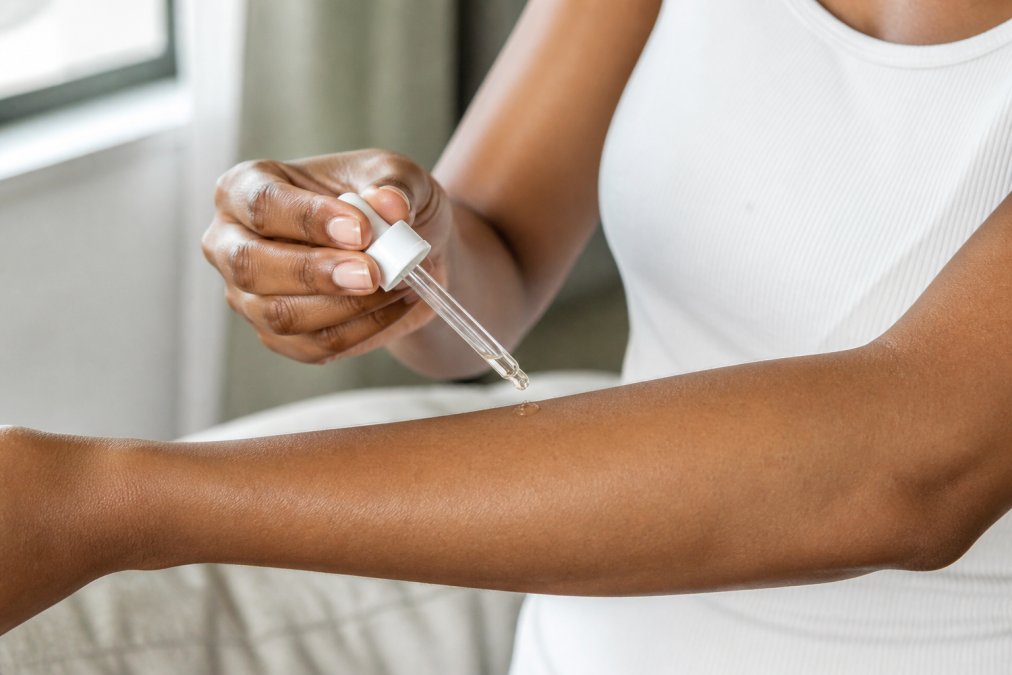
After 24 hours, wash the test area and observe for 24 more hours. If no reaction appears, the serum is likely safe for facial application. Start with twice-weekly use on clean, dry skin, increasing frequency only after two weeks without irritation.
Benefits of Copper Peptides and Bee Venom for Anti-Aging
Copper peptides and bee venom create a synergistic effect neither delivers alone. For sensitive skin, the right supporting ingredients buffer bee venom's sting while amplifying collagen production.
How Copper Peptides and Bee Venom Work Together
Copper peptides (specifically GHK-Cu) signal fibroblasts, the cells responsible for collagen and elastin production, to increase output. This process takes time, but the results are measurable. Fine lines soften, skin elasticity improves, and the overall complexion appears more radiant. Research from peptide skincare efficacy studies shows that copper peptide serums produce visible firming effects within 6-8 weeks.
Bee venom amplifies this through a different mechanism. Melittin triggers a mild inflammatory cascade that signals skin to repair and regenerate, a controlled, beneficial response that accelerates cellular turnover and reduces age spots.
Together, they address multiple aging pathways: copper peptides stimulate collagen synthesis while bee venom accelerates cellular turnover and barrier repair, producing faster results than either ingredient alone.
Ingredient Synergy: Buffering Bee Venom for Sensitive Skin
Bee venom's efficacy depends on which ingredients surround it. Certain combinations reduce irritation while maintaining potency; others amplify sensitivity unnecessarily.
Ingredients that buffer bee venom and support sensitive skin:
- Hyaluronic acid (1-2%): Holds water in the skin, creating a hydration cushion that reduces the perception of stinging and supports barrier repair. This is non-negotiable for sensitive skin formulations.
- Niacinamide (4-5%): Strengthens the skin barrier, reduces inflammation, and regulates sebum production. It actively counteracts the inflammatory signal from bee venom, making the overall effect gentler while maintaining efficacy.
- Ceramides (0.5-1%): Restore the lipid barrier that sensitive skin lacks. When combined with bee venom, ceramides prevent transepidermal water loss (TEWL) that would otherwise leave skin feeling tight or reactive.
- Centella asiatica (cica) extract: Calms irritation and supports barrier function. Often included in sensitive-skin formulations to offset active ingredients.
- Panthenol (provitamin B5): Hydrates and soothes without interfering with peptide efficacy.
Ingredients that amplify bee venom's sting (avoid in sensitive-skin formulations):
- Alcohol (ethanol or SD alcohol 40): Strips the barrier and increases penetration of all actives, including bee venom. This creates unnecessary irritation.
- Fragrance (natural or synthetic): Adds no efficacy and triggers sensitivity in reactive skin types.
- Essential oils: Often irritating and can cause contact dermatitis when combined with active peptides.
- High concentrations of AHAs or BHAs: Combining chemical exfoliants with bee venom creates a double barrier disruption that sensitive skin cannot tolerate.
Formulation Depth: Why Concentration Isn't Everything
A 3% bee venom serum without hyaluronic acid or niacinamide will feel harsher than a 1.5% serum formulated with ceramides and panthenol. Supporting ingredients determine whether sensitive skin experiences gentle, effective treatment or irritation.
For sensitive skin, copper peptides and bee venom deliver anti-aging efficacy without retinoid's adjustment period, peeling, or photosensitivity. Choose a formulation where active peptides are surrounded by barrier-supporting ingredients that work in concert.
Building a Simplified Routine with Bee Venom Serum
Most people overcomplicate skincare by layering six products and introducing multiple actives simultaneously. A simplified routine with bee venom serum as your core active is more effective and sustainable.
Your foundation: cleanser, bee venom serum, moisturizer. This three-step approach delivers everything sensitive skin needs without overwhelming your barrier. Use a gentle, pH-balanced cleanser on damp skin, rinse thoroughly, and pat dry.
Apply bee venom serum to slightly damp skin to enhance absorption and reduce active concentration on the surface.
What to Expect: Timeline and Adjustment Period
Understanding the realistic timeline for bee venom serum results prevents the common mistake of abandoning the routine too early or expecting overnight transformation.
Frequently Asked Questions
Is bee venom serum safe for sensitive skin?
Bee venom serum can work for sensitive skin when introduced gradually and properly patch tested first. The key is starting with a low concentration and building tolerance. Bee venom's anti-inflammatory properties may actually help reduce redness and irritation over time, but individual reactions vary. Always perform a patch test on a small area for 24-48 hours before applying to your full face. If you have a documented bee allergy, consult a dermatologist before use.
How do I patch test bee venom serum on sensitive skin?
Apply a small amount (about the size of a grain of rice) to the inner arm or behind your ear, areas with thinner, more reactive skin. Leave it undisturbed for 24-48 hours and monitor for redness, itching, swelling, or burning. If no reaction occurs, you can proceed to a small facial application on a less sensitive area like the cheek. Wait another 2-3 days before expanding use. This gradual introduction protocol helps your skin barrier adjust and minimizes the risk of dermal irritation.
What are the benefits of copper peptides and bee venom for aging skin?
Copper peptides (GHK-Cu) stimulate collagen production and elastin synthesis, directly addressing fine lines and loss of skin elasticity. Bee venom enhances micro-circulation and cellular turnover, promoting a firmer, more radiant complexion. Together, they work synergistically to improve skin firmness and smoothness while supporting barrier repair. This combination delivers anti-inflammatory and anti-microbial benefits, making the approach effective for both aging concerns and sensitivity management.
How long does it take to see results from bee venom serum?
Most users notice improved hydration and a smoother skin texture within 2-4 weeks of consistent use. Visible firming effects and reduction in fine lines typically appear after 6-8 weeks. Collagen production takes time, so patience is essential. Unlike retinol, bee venom serums generally have a gentler adjustment period with minimal peeling or irritation, making them suitable for sensitive skin types seeking gradual, sustainable improvement.