
Table of Contents
- What Is GHK-Cu and How Copper Peptides Work for Skin
- The Core Benefits of GHK-Cu for Skin
- How to Use Copper Peptides in Your Skincare Routine
- How Long Does It Take for GHK-Cu to Work?
- GHK-Cu vs Retinol for Anti-Aging
- Choosing the Best Copper Peptide Serum for Aging Skin
- Safety, Side Effects, and Ingredient Compatibility
- Frequently Asked Questions
Last Updated: September 21, 2026
What Is GHK-Cu and How Copper Peptides Work for Skin
GHK-Cu is a copper peptide complex that occurs naturally in human plasma and declines with age. The benefits of GHK-Cu for skin stem from its ability to support collagen synthesis, elastin production, and skin barrier repair at the cellular level.
How GHK-Cu Stimulates Collagen and Elastin
GHK-Cu stimulates collagen and elastin by delivering copper ions directly to fibroblasts, the cells responsible for producing the extracellular matrix that keeps skin firm. Copper is a required cofactor for lysyl oxidase, the enzyme that cross-links collagen and elastin fibers (pubmed.ncbi.nlm.nih.gov).
The Core Benefits of GHK-Cu for Skin
The documented benefits cluster around three areas: structural support (firmness, elasticity), repair (wound healing, barrier function), and surface appearance (fine lines, coarse wrinkles, hyperpigmentation). Results vary by formulation, concentration, and consistency of use.
Firmness, Elasticity, and Wrinkle Reduction
Copper peptides support skin firmness by increasing collagen density in the dermis over time. Users typically report improved elasticity before they see wrinkle reduction, because elasticity changes happen in the deeper layers first.
Wound Healing and Skin Barrier Repair
GHK-Cu has a longer research history in wound healing than in cosmetic anti-aging. It supports skin barrier repair by promoting epidermal turnover and reducing inflammation, which is why it shows up in post-procedure recovery protocols.
How to Use Copper Peptides in Your Skincare Routine
Most guides stop at "apply to clean skin." That's the entry point, not the protocol. What follows is a full routine structure, including the maintenance phase that almost no competing article covers.
The Basic Sequence
- Cleanse with a gentle, low-pH cleanser. Skip anything with strong surfactants or a high concentration of exfoliating acids.
- Apply copper peptide serum to clean skin. Damp skin increases penetration of hydrating ingredients but can dilute the peptide, so dry is the safer default.
- Wait 1-2 minutes for absorption.
- Follow with a hyaluronic acid or ceramide moisturizer to seal in hydration.
- Finish with broad-spectrum sunscreen in the morning. Copper peptides do not increase photosensitivity, but the collagen you're trying to preserve does not survive unprotected UV exposure.
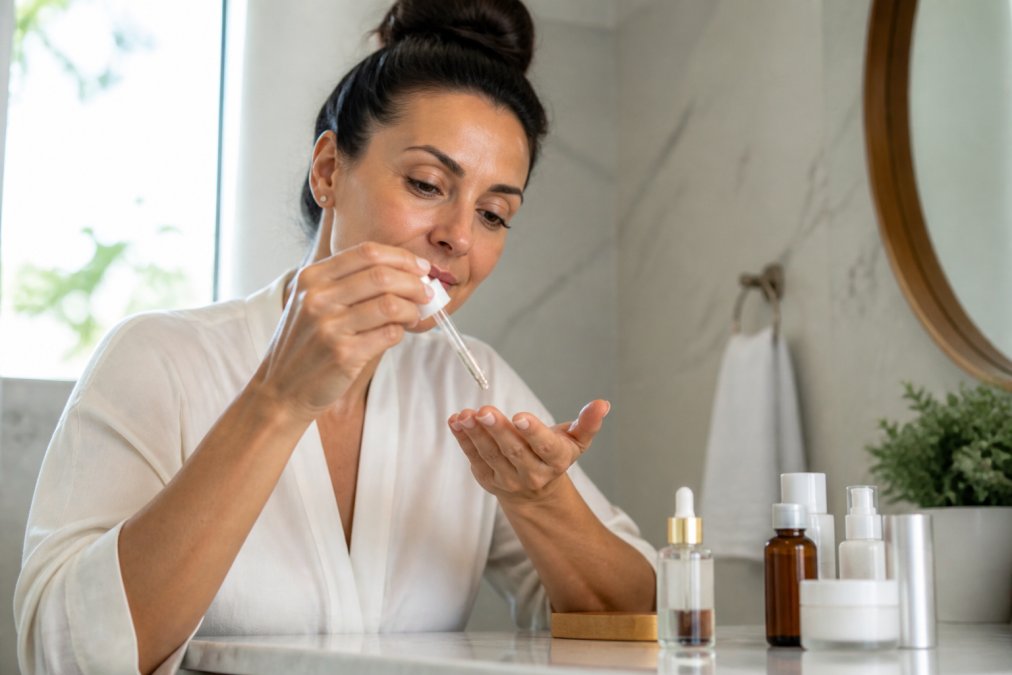
Morning vs Evening
Copper peptides are not photosensitizing, so either works. Evening is the more common choice because it pairs cleanly with a retinoid on alternate nights and because the peptide's repair signaling aligns with the skin's overnight remodeling cycle. If you use vitamin C in the morning, keep copper peptides for the evening and the conflict disappears.
Weekly Protocol for the First 12 Weeks
| Phase | Frequency | Notes |
|---|---|---|
| Weeks 1-2 | Every other evening | Assess tolerance. No other new actives. |
| Weeks 3-6 | Nightly | Add a hydrating moisturizer if any tightness appears. |
| Weeks 7-12 | Nightly, plus morning on non-retinoid days | Optional. Only if skin is calm. |
If you use retinol, alternate nights: retinol one evening, copper peptides the next. Do not layer them in the same step. Retinol's acidic environment can degrade the peptide, and combining both multiplies irritation risk.
The Maintenance Phase (After 12 Weeks)
This is the part competitors skip. Once you've hit the 12-week mark and see the firmness and texture changes you were after, the goal shifts from building to holding.
- Drop to 4-5 nights per week. Daily use is not required to maintain collagen signaling once the dermis has responded. Most users hold results on a five-night schedule.
- Keep the retinol alternation. The two ingredients address different parts of the aging process, and dropping one usually reverses the gains from the other within a few months.
- Reassess every 90 days. Skin changes with seasons, hormones, and stress. A routine that worked in winter may be too heavy in summer.
- Do not chase higher concentrations. More GHK-Cu is not better. Above a certain point, additional peptide does not increase fibroblast response and may increase irritation.
If You Want a One-Step Routine
A single serum that combines copper peptides with hydrating ingredients removes the sequencing guesswork. The Vampire Tx Face Serum pairs GHK-Cu with hyaluronic acid and bee venom in one step, which is the approach most people actually stick with long enough to see results.

How Long Does It Take for GHK-Cu to Work?
Most users notice initial changes in skin hydration and texture within 2-4 weeks. Visible improvements in firmness and fine lines typically take 8-12 weeks of consistent daily use. Deep wrinkle reduction, if it happens, takes longer.
A realistic progression looks like this:
| Timeline | What Most Users Notice |
|---|---|
| Weeks 1-2 | Improved hydration, smoother texture |
| Weeks 4-6 | Better elasticity, reduced irritation |
| Weeks 8-12 | Visible firmness, softened fine lines |
| Months 4-6 | Improved skin density, softened coarse wrinkles |
GHK-Cu vs Retinol for Anti-Aging
GHK-Cu and retinol are not competitors. They work through different mechanisms and suit different skin types. Retinol accelerates cell turnover and is backed by decades of clinical trials. Copper peptides support collagen synthesis and barrier repair with far less irritation.
Choosing the Best Copper Peptide Serum for Aging Skin
The best copper peptide serum for aging skin delivers a stable GHK-Cu concentration in packaging that protects it from light and air. Copper peptides oxidize, and an oxidized serum loses potency.
What to check before buying:
- Concentration disclosure: Look for a stated percentage or clear ingredient positioning
- Packaging: Opaque or airless pumps beat clear dropper bottles for stability
- Supporting ingredients: Hyaluronic acid and ceramides improve tolerance
- Price per ounce: High performance doesn't require a luxury markup
Safety, Side Effects, and Ingredient Compatibility
Copper peptides have a favorable tolerability profile, but the ingredient is a signaling molecule, not an inert humectant. Most reported problems trace back to layering errors, overuse, or applying the peptide to a compromised barrier rather than to the peptide itself.
Why Copper Peptides Clash With Certain Actives
The incompatibility isn't marketing caution. It's chemistry.
- Low-pH acids (glycolic, lactic, salicylic, mandelic): GHK-Cu is stable in a narrow pH band near skin-neutral. A leave-on acid at pH 3.5 or lower can hydrolyze the peptide bond and free the copper ion, which then has no delivery vehicle. You lose the benefit and may see transient irritation from unbound copper.
- L-ascorbic acid (vitamin C): Ascorbic acid is a reducing agent. It can reduce Cu²⁺ to Cu⁺, disrupting the peptide-copper complex. The two also compete for the same skin surface and share a low-pH requirement that vitamin C needs and GHK-Cu does not.
- Benzoyl peroxide: An oxidizing agent that degrades the peptide on contact. This is the one combination worth avoiding entirely rather than separating by time.
- Retinoids: Not a chemical incompatibility so much as a cumulative irritation load. Both accelerate epidermal turnover; stacking them in the same layer during the retinization phase is the most common cause of the redness people blame on copper peptides.
Safe Combinations
Hyaluronic acid, glycerin, ceramides, cholesterol, fatty alcohols, niacinamide, panthenol, and most peptide blends (including matrixyl and argireline) layer without issue. Niacinamide is frequently flagged as a copper antagonist, but that concern comes from older lab conditions using free copper salts, not from the chelated peptide complex used in modern serums.
Skin Type Suitability
This is where most guides stop short, and it matters more than the ingredient list.
- Sensitive or reactive skin: Start at every other evening for two weeks before moving to nightly. Copper peptides are far less irritating than retinol, but a damaged barrier can still sting on first contact.
- Acne-prone skin: GHK-Cu is not comedogenic on its own, but it does support wound remodeling, and some users report that active inflammatory lesions heal with more post-inflammatory pigmentation when copper is applied directly over them. Apply around active breakouts, not on top of them.
- Rosacea-prone skin: Copper's role in modulating inflammation is theoretically helpful, but flushing triggers are individual. Patch test during a calm period, not during a flare.
- Post-procedure skin: This is the strongest use case. Many practitioners recommend copper peptides after microneedling, fractional laser, or chemical peels because the peptide supports the remodeling phase. Wait until the skin is closed and no longer weeping.
Copper Toxicity: The Question Nobody Answers
Topical GHK-Cu does not meaningfully raise systemic copper levels. The molecule is too large to penetrate past the dermis in significant quantity, and the amount of elemental copper in a typical serum dose is a fraction of what you get from a single serving of nuts or dark chocolate. Wilson's disease and other copper-handling disorders are a different conversation, and anyone with a diagnosed copper metabolism condition should clear topical use with their physician first.
Patch Testing Protocol
Apply a small amount to the inner forearm twice daily for three days. If no redness, itching, or texture change appears, move to a small area of the jawline for another three days before full-face use. The American Academy of Dermatology guidance on patch testing outlines the standard method.
Frequently Asked Questions
How long does it take to see results from GHK-Cu?
Most people notice early changes in hydration and smoothness within 2 to 4 weeks of daily use. Visible improvements in firmness and fine lines typically take 8 to 12 weeks, since collagen remodeling happens gradually. Deep wrinkles and skin laxity may need 12 to 24 weeks of consistent application. Take a photo every 4 weeks under the same lighting so you can track real progress instead of guessing.
Can GHK-Cu be used with other active skincare ingredients?
Yes, but timing matters. GHK-Cu works well alongside hyaluronic acid, niacinamide, and most moisturizers. Avoid layering it directly with strong acids like glycolic or ascorbic acid in the same step, because low pH can destabilize the copper peptide. Apply your acid product, wait 15 to 20 minutes, then apply your copper peptide serum. This keeps both ingredients effective without irritation.
What are the potential side effects of using copper peptides?
Copper peptides are generally well tolerated. Some users experience mild redness, tingling, or dryness during the first week as their skin adjusts. These effects usually fade within a few days. If irritation persists beyond two weeks, reduce frequency to every other day. People with known metal sensitivities should patch test on the inner forearm for 24 hours before applying to the face.
Should I apply GHK-Cu daily?
Daily use, once or twice a day, is the standard approach for anti-aging support. Apply it to clean, dry skin before heavier creams. If your skin is sensitive, start with once daily and build up over two weeks. Consistency matters more than frequency, so a daily routine you can maintain will outperform an aggressive schedule you abandon after a week.
What is the difference between GHK-Cu and other peptides?
GHK-Cu is a copper-binding tripeptide, meaning it carries a copper ion that supports collagen synthesis, elastin production, and antioxidant activity. Other peptides, like matrixyl or argireline, focus on different pathways such as signaling or muscle relaxation. GHK-Cu stands out because it combines peptide signaling with copper delivery, which supports wound healing and skin barrier repair at the same time.
Does GHK-Cu make your face look better?
Users often report firmer, smoother, and more even-looking skin after consistent use. GHK-Cu supports collagen and elastin production, which can reduce the appearance of fine lines and improve skin density over time. It also helps with hyperpigmentation and overall tone. Results depend on your starting point, routine consistency, and sun protection. Pairing it with daily SPF gives the best visible outcome.
Building a routine that actually delivers results comes down to consistency and choosing ingredients that work together instead of against each other. Vampire Tx built its face serum around that principle, combining GHK-Cu, hyaluronic acid, and bee venom in one step so you get firmness support, hydration, and texture improvement without a cabinet full of products or a luxury price. Get started with Vampire Tx and lock your skin in its prime.