
Table of Contents
- Why Anti-Aging and Sensitive Skin Don't Have to Conflict
- Signs of a Damaged Skin Barrier and Why It Matters
- How to Fix Skin Barrier Damage: The Foundation for Anti-Aging
- How to Introduce Actives to Sensitive Skin Safely
- Building Your Anti-Aging Routine for Sensitive Skin
- Advanced Ingredients That Work for Sensitive Skin
- Patch Testing and Introduction Protocols
- Ingredients to Avoid When You Have Sensitive Skin
- Frequently Asked Questions
Last Updated: September 19, 2026
Why Anti-Aging and Sensitive Skin Don't Have to Conflict
The assumption that you can't develop an anti aging routine for sensitive skin is wrong. Most people believe you have to choose between protecting your skin barrier or fighting wrinkles, but you can do both.
An anti-aging routine for sensitive skin is more effective than aggressive approaches because it works with your skin's biology. When you rebuild your skin barrier first, anti-aging ingredients penetrate deeper and cause fewer side effects.
Sensitive skin is usually a symptom of barrier damage. Fix the barrier, and your skin becomes less reactive. Then introduce anti-aging actives gradually, in the right order, and your skin thrives on them.
Signs of a Damaged Skin Barrier and Why It Matters
Your skin barrier is the outermost layer of your epidermis, made up of lipids and dead skin cells. When healthy, it locks moisture in and keeps irritants out. When damaged, you get redness, tightness, persistent dryness, and reactivity to products.
A compromised barrier shows up as tightness after moisturizing, stinging from previously tolerated products, unexplained redness, sandpaper texture, and pronounced fine lines from dehydration. These are signs your barrier needs repair, not aging.
A damaged barrier prevents active ingredients from working properly. Retinoids, peptides, and vitamin C can't penetrate effectively when your skin is inflamed and dehydrated. Most people blame the product when the real issue is barrier preparation.
How to Fix Skin Barrier Damage: The Foundation for Anti-Aging
Before introducing anti-aging actives, your barrier needs 4-8 weeks of consistent, minimal intervention to restore normal moisture levels.
Use a single, gentle cleanser, fragrance-free, non-comedogenic, non-lathering. Cleanse with lukewarm water and pat dry gently.
Apply a hydrating serum with hyaluronic acid while skin is damp, it pulls water into the outer layers. Follow with a ceramide-rich moisturizer; ceramides are the building blocks of your barrier.
At night, use an occlusive like a heavier cream or facial oil to seal in moisture during sleep, when barrier repair happens. Skip all actives during this phase.
By week 4-6, you should notice less redness and tightness. This is when your barrier is ready for actives. Introducing them earlier is why most people fail.
How to Introduce Actives to Sensitive Skin Safely
Once your barrier is repaired, introduce anti-aging actives carefully. Order and pace matter enormously.
Start with a low-concentration retinoid or retinol alternative like bakuchiol or 0.025% retinol. Use it once or twice per week at night, mixed into your moisturizer to dilute it.
Building Your Anti-Aging Routine for Sensitive Skin
A complete anti-aging routine for sensitive skin follows a specific structure. Here's what works:
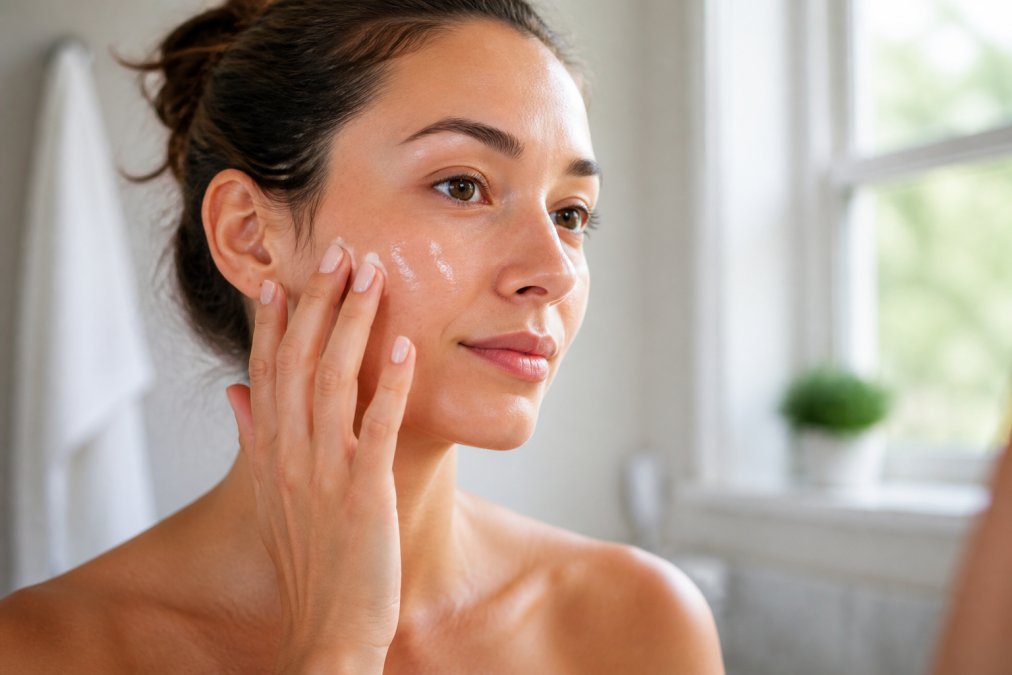
The Gentle Cleanser: Your Starting Point
Your cleanser sets the tone for everything. A harsh cleanser damages your barrier twice daily, so choose carefully.
Hydration with Hyaluronic Acid and Ceramides
After cleansing, apply a hydrating serum with hyaluronic acid while skin is damp. It pulls moisture into your epidermis.
Sun Protection as Your Anti-Aging Essential
This is non-negotiable. Photoaging, sun damage, is responsible for 80% of visible aging. Without sun protection, every other anti-aging ingredient you use is fighting an uphill battle.
Advanced Ingredients That Work for Sensitive Skin
Once your barrier is strong and you're comfortable with a retinoid, you can layer in more advanced anti-aging ingredients. These are gentler than they sound and can produce dramatic results when introduced correctly.
Copper Peptides for Collagen Production
Copper peptides are amino acid chains bonded to copper, a trace mineral essential for collagen synthesis. They signal your skin to produce more collagen and elastin, which directly addresses fine lines and loss of skin elasticity. Unlike retinoids, they don't cause irritation or peeling.
Bee Venom: Soothing Inflammation While Fighting Wrinkles
Bee venom sounds intense, but it's actually one of the gentlest actives available for sensitive skin. It contains peptides and enzymes that reduce inflammation and stimulate collagen production. The venom causes a mild, controlled inflammatory response that triggers your skin's repair mechanisms, without the irritation of stronger actives.
Antioxidants for Free Radical Protection
Free radicals are unstable molecules created by sun exposure, pollution, and natural metabolism. They damage collagen and elastin, accelerating aging. Antioxidants neutralize free radicals before they can cause damage.
Patch Testing and Introduction Protocols
Patch testing is the single most important step for sensitive skin. It's how you identify problem ingredients before they damage your skin.
Ingredients to Avoid When You Have Sensitive Skin
Some ingredients are simply too irritating for reactive skin, no matter how effective they are for other skin types. Knowing what to avoid saves you from expensive mistakes and barrier damage.
| Step | Duration | Frequency | Goal |
|---|---|---|---|
| Barrier Repair Phase | 4-8 weeks | Daily | Restore skin barrier integrity |
| Gentle Retinoid Introduction | Weeks 1-4 | 1-2x per week | Build retinoid tolerance |
| Increase Retinoid Frequency | Weeks 5-8 | 3-4x per week | Establish consistent use |
| Introduce Second Active | Week 8-12+ | Daily or as directed | Layer complementary ingredients |
| Full Routine Established | 12+ weeks | Daily | Maintain results and prevent aging |
Frequently Asked Questions
Can I really use bee venom in an anti-aging routine if I have sensitive skin?
Yes, bee venom can work for sensitive skin when introduced properly. Bee venom contains peptides and amino acids that stimulate collagen production and reduce inflammation, not cause it. The key is patch testing first on a small area of skin for 3-5 days, then gradually incorporating it into your routine 2-3 times weekly. Start with lower concentrations and increase frequency only if your skin tolerates it well. Many people with reactive skin find bee venom soothing rather than irritating when applied correctly.
What are the signs of a damaged skin barrier I should watch for?
A compromised skin barrier typically shows persistent redness, increased sensitivity to products you previously tolerated, tightness or flaking even when moisturized, increased breakouts, and a weakened ability to retain moisture (transepidermal water loss). You may also notice your skin feels reactive to temperature changes or mild products. These signs indicate your skin's protective lipid layer needs repair before introducing active anti-aging ingredients. Focus on gentle cleansing, ceramides, and hyaluronic acid until these symptoms resolve, usually 2-4 weeks of barrier repair.
How long does it take to see anti-aging results with sensitive skin?
Results vary, but most people notice improved skin texture and hydration within 4-6 weeks of consistent use. Fine lines and skin elasticity improvements typically appear after 8-12 weeks as collagen production increases. Since sensitive skin requires a slower introduction of actives, don't expect results as quickly as someone using high-strength retinoids daily. The trade-off is sustainable improvement without irritation or barrier damage. Patience with a gentle, consistent routine yields better long-term results than aggressive approaches that damage sensitive skin.
How do I introduce actives like copper peptides to sensitive skin without causing a reaction?
Start with patch testing: apply a small amount to your inner arm or behind your ear for 3-5 days to check for allergic reactions. Once cleared, introduce the active once or twice weekly in your evening routine, using the lowest recommended concentration. Wait 1-2 weeks before increasing frequency. Apply actives to clean, dry skin, then wait 20 minutes before layering other products to avoid ingredient conflicts. If redness or irritation develops, stop use for 3-5 days, then reintroduce at an even lower frequency. Building tolerance gradually prevents barrier damage and inflammation.
What ingredients should I avoid if I have sensitive skin?
Avoid high-strength retinoids (start with gentler alternatives like retinol esters), fragrance (both natural and synthetic), essential oils, alcohol denat, and sulfates. Limit exfoliating acids to once weekly maximum, and avoid physical scrubs entirely. Some people with sensitive skin also react to benzoyl peroxide, niacinamide at high concentrations, or vitamin C in unstable forms. Instead, choose fragrance-free, hypoallergenic products with ceramides, peptides, and soothing agents like centella asiatica. Always check ingredient lists and patch test new products, even if they're labeled 'sensitive skin-friendly.'
Can one serum really address multiple signs of aging, or do I need a full routine?
A high-performance serum with copper peptides and bee venom can be a powerful, all-in-one age-defying solution. However, a complete routine works better: you still need a gentle cleanser, hydrating moisturizer, and SPF 30+ daily. These foundational steps protect your skin barrier and maximize the serum's effectiveness. Think of the serum as your active treatment while the rest of your routine provides the support system sensitive skin needs. Simplified routines with fewer products reduce irritation risk while still delivering anti-aging results.
Should I adjust my anti-aging routine as I enter my 40s, 50s, or 60s?
Yes, skin changes significantly with age. In your 40s, focus on prevention and early fine lines with gentle retinol alternatives and peptides. By your 50s, collagen loss accelerates and hormonal changes (especially perimenopause) increase sensitivity, so prioritize barrier repair, hyaluronic acid, and anti-inflammatory ingredients. In your 60s, skin becomes thinner and drier, emphasize ceramides, peptides for collagen stimulation, and antioxidants for free radical protection. Menopausal skin particularly benefits from bee venom and copper peptides due to their anti-inflammatory and collagen-boosting properties. Adjust frequency and concentration based on how your skin responds, not just your age.
What's the difference between medical-grade and budget-friendly anti-aging products for sensitive skin?
Medical-grade products often contain higher concentrations of active ingredients and stricter manufacturing standards, while budget-friendly options may use lower concentrations or less stable formulations. However, higher price doesn't always mean better results for sensitive skin, in fact, gentler formulations with proven ingredients like copper peptides and bee venom at appropriate concentrations can outperform expensive luxury products. The key is ingredient quality, stability, and whether the formula supports your skin barrier. Read ingredient lists carefully; many affordable serums deliver the same active ingredients as premium brands without the luxury markup.