
Table of Contents
- Why Deep Wrinkles Need a Different Approach Than Fine Lines
- Best Serum for Deep Wrinkles: What the Research Actually Shows
- Argireline vs. Matrixyl for Wrinkles: Which Peptide Works Better
- Retinol Serum for Deep Wrinkles: Strength, Concentration, and Results
- How to Layer Peptide Serum and Retinol for Maximum Impact
- Ingredient Comparison: The Ordinary Alternative for Deep Wrinkles
- Realistic Timeline: When to Expect Results on Deep Wrinkles
- Frequently Asked Questions
Last Updated: October 19, 2026
Why Deep Wrinkles Need a Different Approach Than Fine Lines
Deep wrinkles aren't just fine lines that got worse. They're structural changes in the dermal layer, where collagen has genuinely broken down. Fine lines sit on the surface and respond to hydration and gentle exfoliation.
A serum designed for fine lines won't address the loss of firmness and elasticity that creates deep wrinkles. You need actives that stimulate collagen production and support cellular repair: peptides, retinoids, and growth factors. Hyaluronic acid alone won't cut it.
At Vampire Tx, we've focused on this exact problem. Our serum combines copper peptides, bee venom, and hyaluronic acid because deep wrinkles respond to ingredients that rebuild skin structure, not just hydrate the surface. Copper peptides signal collagen production; bee venom boosts circulation and cellular activity.

Best Serum for Deep Wrinkles: What the Research Actually Shows
The best serum for deep wrinkles combines peptides, retinol or retinol alternatives, and hydration support.
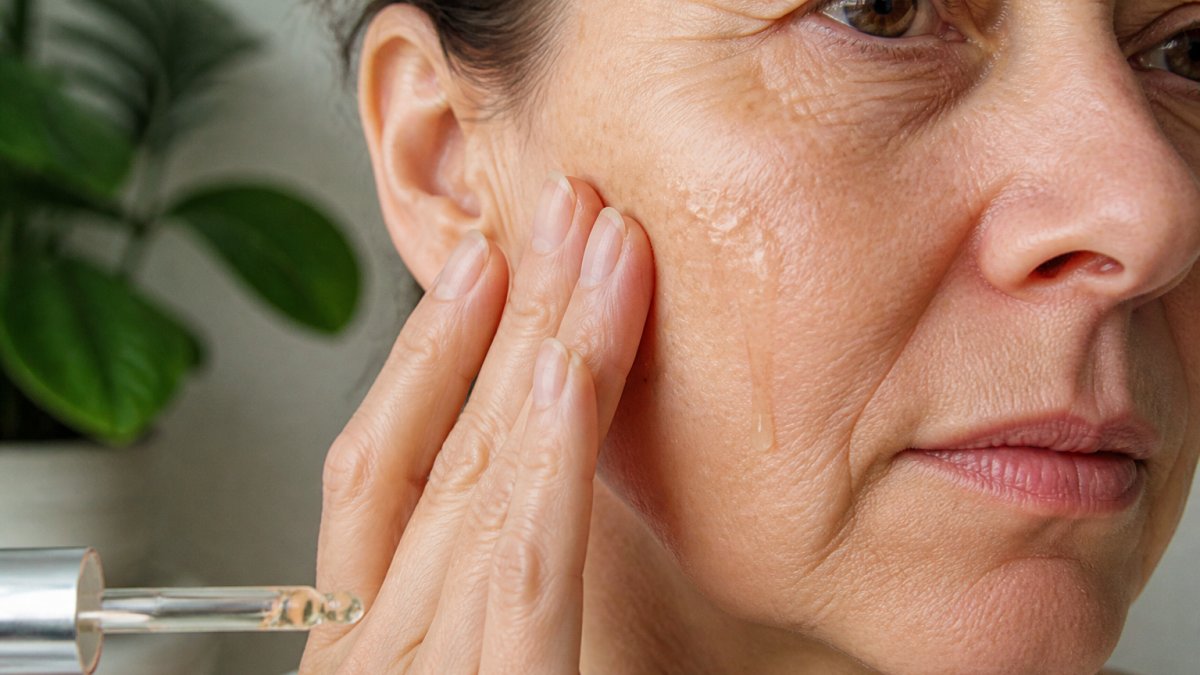
What most guides miss is that concentration matters far more than the ingredient list. A serum with 0.5% retinol will deliver results; one with 0.03% won't, no matter how many other actives surround it. The same applies to peptides.
Vampire Tx's formula delivers copper peptides (GHK-Cu) at therapeutic levels with bee venom that amplifies cellular activity, targeting collagen breakdown, reduced elasticity, and weakened barrier function.
Check the ingredient concentration, not just the ingredient name. A serum listing retinol at the end of the ingredient list contains negligible amounts. Effective formulas list active ingredients in the first third of the ingredient deck.
Argireline vs. Matrixyl for Wrinkles: Which Peptide Works Better
Argireline is a synthetic peptide that mimics a neurotransmitter, reducing muscle contractions that deepen expression lines.
For deep wrinkles, Matrixyl typically delivers more visible results because deep wrinkles are structural, not muscular. Argireline can prevent new wrinkles from deepening but won't rebuild what's gone.
Copper peptides (the active in Vampire Tx's serum) work similarly to Matrixyl but also have anti-inflammatory properties and support wound healing at the cellular level, making them particularly effective for mature skin where inflammation accelerates aging.
The real difference comes down to mechanism: Argireline relaxes muscles, while Matrixyl and copper peptides rebuild tissue. For deep wrinkles, tissue rebuilding wins. Combine either with retinol to address prevention and reversal simultaneously.
Retinol Serum for Deep Wrinkles: Strength, Concentration, and Results
Retinol remains the most studied over-the-counter anti-aging ingredient for deep wrinkles, increasing cell turnover, stimulating collagen synthesis, and thickening the epidermis. The problem is rarely effectiveness; it's that most people use concentrations too weak to matter, apply it too aggressively, or choose the wrong form for their skin type.
Concentration ranges and what they actually deliver
Effective over-the-counter retinol concentrations for deep wrinkles start around 0.5% and go up to about 1%. Below 0.5%, results take longer and are subtler; above 1%, irritation often becomes the limiting factor. Encapsulated retinol and retinaldehyde can deliver comparable results at lower nominal percentages because more active reaches the skin intact.
With consistent use three to four nights per week, most people see early texture changes around 4-6 weeks and visible softening of deep wrinkles around 8-12 weeks, with full collagen remodeling through 16-20 weeks. Stopping for weeks resets progress, so consistency beats intensity.
Choosing by skin type and sensitivity
The right retinol route depends less on the headline percentage than on how your skin tolerates actives:
- Dry or mature skin: Start with 0.3%-0.5% encapsulated retinol or retinaldehyde, buffered with a ceramide or panthenol moisturizer. Dry skin tolerates retinol better when hydration is layered underneath, not just on top.
- Oily or acne-prone skin: Standard (non-encapsulated) retinol at 0.5%-1% is usually well tolerated and can help with both wrinkles and texture. Gel or emulsion textures are preferable to heavy creams.
- Sensitive or reactive skin: Begin with bakuchiol or a very low-strength encapsulated retinol (0.1%-0.3%), applied two nights per week. Bakuchiol delivers retinol-like collagen signaling with far less irritation and no photosensitivity, at the cost of slightly slower results.
- Retinoid-intolerant skin (previous retinol reactions): A peptide-only route is the safer first step. Matrixyl or copper peptides (GHK-Cu) at 1%-3% signal collagen production without the turnover acceleration that triggers peeling and redness. You can reintroduce a low-strength retinoid later, once the barrier is stable.
- Pregnancy or breastfeeding: Skip retinol entirely and use bakuchiol or peptides. Retinol is not recommended during pregnancy, and bakuchiol is the most commonly cited alternative.
Retinol alternatives and how they compare
Bakuchiol is the best-studied retinol alternative, delivering similar collagen-related gene-expression changes without irritation, photosensitivity, or pregnancy restrictions. Results arrive a few weeks later than with retinol, but for reactive skin or anyone who has failed retinol before, it's worth trying first.
Peptides are a different category rather than a direct retinol substitute. Argireline targets dynamic expression lines; Matrixyl and copper peptides signal collagen production. They don't accelerate cell turnover, so they're complementary rather than interchangeable. The strongest routine pairs a collagen-signaling peptide with retinol or bakuchiol to address both turnover and structural rebuilding.
Layering and tolerability
Introduce retinol two to three nights per week and increase only after four to six weeks without irritation. Avoid layering it with vitamin C, strong AHAs, or high-percentage niacinamide until your skin adapts, and apply a simple, fragrance-free moisturizer afterward to support barrier function overnight.
A peptide serum pairs well with retinol because it contains no conflicting actives. Copper peptides and hyaluronic acid support repair and hydration while retinol drives turnover, reducing irritation risk. A formula combining copper peptides, bee venom, and hyaluronic acid can sit underneath or alongside a low-strength retinol rather than replacing it.
How to Layer Peptide Serum and Retinol for Maximum Impact
Order matters: apply peptide serum first, then retinol. Peptides are water-based and lighter; retinol is oil-soluble and heavier. Layering light-to-heavy ensures both penetrate properly. Wait 2-3 minutes between applications.
Start with retinol two to three times weekly, not every night, and increase only after your skin adapts (typically 4-6 weeks).
Avoid mixing retinol with vitamin C, niacinamide, or AHAs initially, since these can overwhelm the skin barrier. Once your skin tolerates retinol, add one other active at a time, not multiple.
Moisturize after your actives absorb to lock in hydration and support barrier function overnight.
Ingredient Comparison: The Ordinary Alternative for Deep Wrinkles
Most roundups list actives in the abstract. The more useful question is: if you were using a specific product from The Ordinary's lineup, which alternative best matches that product's active, strength, and role in a routine? Here is a direct, ingredient-by-ingredient comparison.
| The Ordinary product (active) | Primary role | Typical strength | Best alternative match | What to check before switching |
|---|---|---|---|---|
| Retinol 0.5% in Squalane (retinol) | Cell turnover, collagen signaling | 0.5% retinol | Encapsulated retinol 0.5%-1%, or bakuchiol for sensitive skin | Whether the formula is encapsulated (slower release, less irritation) and whether it is stabilized |
| Granactive Retinoid 2% Emulsion (hydroxypinacolone retinoate) | Cell turnover with lower irritation | ~2% HPR complex | HPR or retinaldehyde formulas at comparable strength | HPR is gentler than retinol but evidence on deep wrinkles is thinner; retinaldehyde sits between retinol and tretinoin in potency |
| Matrixyl 10% + HA (Matrixyl 3000) | Collagen signaling peptide | ~10% peptide blend | Matrixyl 3000 at 3%-5%, or copper peptides (GHK-Cu) at 1%-3% | Peptide percentage is often a blend, not pure active; check whether the peptide is listed first |
| Argireline Solution 10% (acetyl hexapeptide-8) | Expression-line softening | ~10% Argireline | Argireline 5%-10%, or a dual peptide serum | Argireline targets dynamic lines; it will not rebuild static deep wrinkles on its own |
| Buffet (multi-peptide + HA) | Broad peptide support | Multi-peptide blend | Multi-peptide serum with Matrixyl, Argireline, and copper peptides | Look for actives in the first third of the ingredient deck, not trace amounts |
| Hyaluronic Acid 2% + B5 | Hydration and plumping | 2% HA | HA 1%-2% with panthenol, or a serum that pairs HA with peptides | HA improves surface appearance within 1-2 weeks but does not rebuild dermal collagen |
| Niacinamide 10% + Zinc 1% | Barrier support, oil control | 10% niacinamide | Niacinamide 4%-5% | 10% is above the range most skin tolerates without irritation; 4%-5% is the evidence-backed sweet spot |
| AHA 30% + BHA 2% Peeling Solution | Surface exfoliation | 30% AHA / 2% BHA | Lower-strength AHA/BHA (5%-10%) used 1-2x weekly | High-strength peels are not a deep-wrinkle treatment and should not be layered with retinol |
A few patterns emerge. The Ordinary's strength is transparency and price; its weakness for deep wrinkles is that most products are single-ingredient, so you layer four or five to cover collagen signaling, turnover, and hydration.
That's the gap most competitor roundups leave open: they compare headline ingredients but not product-to-product equivalence. If you used Retinol 0.5% in Squalane, ask what formula delivers 0.5% retinol with less irritation risk or better supporting actives.
What makes an alternative work is concentration plus formulation plus routine fit. A serum with two actives at therapeutic doses beats one with five at trace amounts. Match the active, match the strength, then check whether the new formula adds something the old one lacked, such as encapsulation, a barrier-support ingredient, or a second peptide for a different mechanism.
Realistic Timeline: When to Expect Results on Deep Wrinkles
Deep wrinkles don't disappear; they improve. Expecting them to vanish is the fastest way to abandon a routine that's working. A good serum reduces visible wrinkle depth by 15-30% over three months with consistent use.
Fine lines often improve in 4-6 weeks.
The timeline depends on ingredient concentration, skin thickness, and consistency. Thicker skin responds slower, and missing applications or stopping for weeks resets your progress.
Many people abandon routines too early. Take baseline photos at week 0 and again at week 12; the difference is usually visible in photos before it's obvious in the mirror, which prevents the trap of expecting overnight transformation.
The serum works best as a long-term routine, not a short-term fix.
Deep wrinkles require a different approach because they're structural damage, not surface dehydration. With copper peptides (GHK-Cu), bee venom, and hyaluronic acid working together, you get the cellular repair deep wrinkles need. Shop Vampire Tx Face Serum and start seeing results in as little as 6-8 weeks.
Frequently Asked Questions
What ingredients should I look for in a serum for deep wrinkles?
Copper peptides, retinol, and peptides like Argireline and Matrixyl are proven active ingredients for deep wrinkles. Copper peptides stimulate collagen production and skin firmness. Retinol increases cell turnover and smooths texture. Peptides signal skin cells to strengthen elasticity. Hyaluronic acid supports hydration, which makes wrinkles appear less pronounced. Look for serums combining multiple actives rather than single-ingredient products for deeper wrinkles.
Is Argireline or Matrixyl better for wrinkles?
Argireline and Matrixyl work differently. Argireline relaxes facial muscles to soften expression lines, similar to injectable treatments. Matrixyl stimulates collagen production to fill wrinkles from within. For deep wrinkles, Matrixyl generally outperforms Argireline because deep folds need structural support, not just surface relaxation. Many effective serums combine both peptides with retinol or copper peptides to address wrinkles on multiple levels.
How long does it take for a wrinkle serum to show results?
Most serums require 6-12 weeks of consistent daily use before visible improvements appear. Deep wrinkles take longer than fine lines because they require sustained collagen remodeling.
Can I use peptides and retinoids in the same skincare routine?
Yes, peptides and retinoids layer well together and often work synergistically. Apply peptide serum first to damp skin, then retinol after it dries. Start with retinol 2-3 times weekly to build tolerance, then increase frequency. Sensitive skin may experience irritation combining them immediately; introduce retinol gradually over 2-3 weeks while using peptides daily. Always use SPF 30+ during the day since retinol increases sun sensitivity. This combination addresses wrinkles through multiple mechanisms: peptides build collagen while retinol accelerates cell turnover.