
Last Updated: October 23, 2026
Quick Summary
Build a collagen boosting skincare routine around proven actives: vitamin C and antioxidants in the morning, then retinoids or copper peptides at night, always sealed with moisturizer and daily SPF 30 or higher. Start retinol low, two nights a week, and build up slowly.
- Apply products thinnest to thickest so each layer absorbs before the next seals it in.
- Use roughly a nickel-sized amount of sunscreen for the face and neck, reapplying every two hours outdoors.
- Start with a low-strength retinol two nights a week and build to every other night over several weeks.
- Expect smoother texture in four to eight weeks and firmer skin in three to six months.
- Introduce one new active at a time and give it two weeks before adding the next.
Table of Contents
- Step 1: Choose Collagen-Boosting Skincare Ingredients That Actually Work
- Step 2: Master Your Retinol Skincare Routine Without Irritation
- Step 3: Build the Morning Routine That Protects Collagen
- Step 4: Build the Evening Routine That Rebuilds Collagen
- Step 5: Follow a Skincare Routine for Firmer Skin (Product Order and Frequency)
- Step 6: How Long Does It Take to Boost Collagen? Realistic Timelines
- Step 7: Avoid These Common Mistakes in Your Collagen Boosting Skincare Routine
- Conclusion
- Frequently Asked Questions
Step 1: Choose Collagen-Boosting Skincare Ingredients That Actually Work
Collagen is the protein that gives skin its bounce and structure. After your mid-20s, your body makes less of it each year. That is why a collagen boosting skincare routine matters: you cannot inject new collagen with a cream, but you can support the skin's own production and protect what you already have.
Two ingredient groups do most of the work:
- Copper peptides (GHK-Cu): signal the skin to support repair and firmness.
- Retinoids: encourage surface renewal and smoother texture over time.
- Vitamin C and antioxidants: shield collagen from daily damage.
- Peptides and hyaluronic acid: support hydration and skin elasticity.
If you are weighing actives, this copper peptides vs retinol comparison breaks down which one fits your skin.
Step 2: Master Your Retinol Skincare Routine Without Irritation
A retinol skincare routine works best when you start slow. Most people quit because they rush.
Follow these rules:
- Begin with a low-strength retinol, two nights a week.
- Apply to dry skin, then moisturize.
- Build up to every other night over several weeks.
- Skip retinol on nights your skin stings or flakes.
Retinol does not play well with everything. Acids, benzoyl peroxide, and strong exfoliants can trigger redness. Know which ingredients to avoid with retinol before you layer them.
Step 3: Build the Morning Routine That Protects Collagen
Morning is about defense. UV exposure breaks down collagen faster than any serum can rebuild it, so protection comes first. A morning routine that supports collagen should be short, consistent, and built around antioxidant support plus broad-spectrum sun protection.
The morning order, and why it works
Apply products thinnest to thickest so each layer can absorb before the next one seals it in.
- Gentle cleanser. A low-foaming or cream cleanser removes overnight oil without stripping the barrier. If your skin feels tight after cleansing, the cleanser is too harsh.
- Vitamin C serum. Apply to clean, dry skin. Vitamin C is an antioxidant that helps shield collagen from daily oxidative stress and can support the skin's own repair processes. A pea-sized amount is enough for the full face and neck.
- Optional hydrating layer. A hyaluronic acid or peptide serum can go here if your skin feels dry. Peptides support hydration and elasticity; they are not a substitute for sun protection.
- Moisturizer. Seals in the serum layers and supports the barrier. Dry or mature skin may prefer a richer cream; oily skin may prefer a gel or lotion.
- Sunscreen, SPF 30 or higher. This is the single most effective anti-aging step you can take. The American Academy of Dermatology sunscreen guidance recommends broad-spectrum protection every day, not just at the beach.
How much sunscreen, and how often
Most people apply far less sunscreen than the label assumes. A common guideline is about one ounce (a shot glass) for the full body, and roughly a nickel-sized amount for the face and neck. Reapply every two hours outdoors, and after swimming or heavy sweating. Indoors near a window, a single morning application is usually enough for incidental exposure.
Morning adaptations by skin type
- Sensitive skin: Skip the vitamin C serum every other day at first, or choose a gentler derivative. Patch-test on the jawline for three nights before full-face use.
- Oily or acne-prone skin: Use a gel moisturizer and a lightweight, non-comedogenic sunscreen. Avoid heavy creams that can clog pores.
- Dry or mature skin: Layer a hydrating serum under a richer moisturizer, and consider a sunscreen with added emollients.
- Using a prescription retinoid at night: Keep mornings simple. Cleanser, moisturizer, sunscreen is enough; adding vitamin C and exfoliants on top raises irritation risk.
What not to do in the morning
Do not stack vitamin C with benzoyl peroxide or strong acids in the same layer, the combination can irritate and may reduce efficacy. If you use an exfoliating acid, save it for a different morning or alternate days. And do not skip sunscreen because your moisturizer or foundation claims SPF; you would need to apply far more makeup than anyone actually uses to reach the labeled protection.
Step 4: Build the Evening Routine That Rebuilds Collagen
Evening is when repair happens. This is where your collagen boosting skincare earns its keep, but only if you build it around frequency and tolerance rather than stacking every active at once.
The evening order
- Cleanse. If you wore sunscreen, use a cleanser that removes it fully; a double cleanse (oil-based then water-based) helps if you wear heavy sunscreen or makeup.
- Treatment step. This is where your retinoid, peptide serum, or exfoliant goes, one active per night, not all three.
- Moisturizer. Seal the treatment in and support the barrier overnight.
- Optional occlusive. A thin layer of petrolatum or a barrier balm on dry patches can reduce retinoid flaking.
Retinoid nights: frequency and buffering
Retinoids, including retinol and prescription retinoids, encourage surface renewal and smoother texture over time. They are the most evidence-backed topical for visible skin aging, but they require patience.
- Start with a low-strength retinol two nights a week.
- Apply to dry skin, then moisturize.
- Build to every other night over several weeks, then nightly if your skin tolerates it.
- Skip retinoid on nights your skin stings, flakes, or feels raw.
If you are sensitive, buffer: apply moisturizer first, then the retinoid, then another layer of moisturizer. This slows absorption and reduces irritation at the cost of some efficacy.
Peptide nights: what to expect
Copper peptides (GHK-Cu) signal the skin to support repair and firmness. They are generally gentler than retinoids and can be used on off-nights or layered under moisturizer. Evidence for topical peptides is promising but less established than for retinoids, think of them as supportive, not a replacement for sun protection or a retinoid if firmness is your main goal.
Evening adaptations by skin type
- Sensitive skin: Start with peptides only, and introduce retinoid once or twice a week after four weeks. Choose a cream moisturizer over a lotion.
- Oily or acne-prone skin: A gel moisturizer and a retinoid can help, but avoid heavy occlusives. If you use a benzoyl peroxide spot treatment, keep it away from retinoid nights.
- Dry or mature skin: Buffer the retinoid with moisturizer, and consider an occlusive layer on flaking areas.
- Using prescription retinoids: Follow your prescriber's instructions; do not add over-the-counter retinoids or strong acids without asking.
A simple weekly template
| Night | Treatment |
|---|---|
| Monday | Retinoid |
| Tuesday | Peptide serum |
| Wednesday | Retinoid |
| Thursday | Peptide serum |
| Friday | Retinoid |
| Saturday | Peptide serum or hydrating mask |
| Sunday | Recovery: moisturizer only |
If you want one serum that does the heavy lifting on peptide nights, our VAMPIRE TX FACE SERUM pairs copper peptides with bee venom and hyaluronic acid. It slots into the treatment step and keeps the routine short.

Step 5: Follow a Skincare Routine for Firmer Skin (Product Order and Frequency)
Order matters more than most people think. Thin products go first, thick products go last.
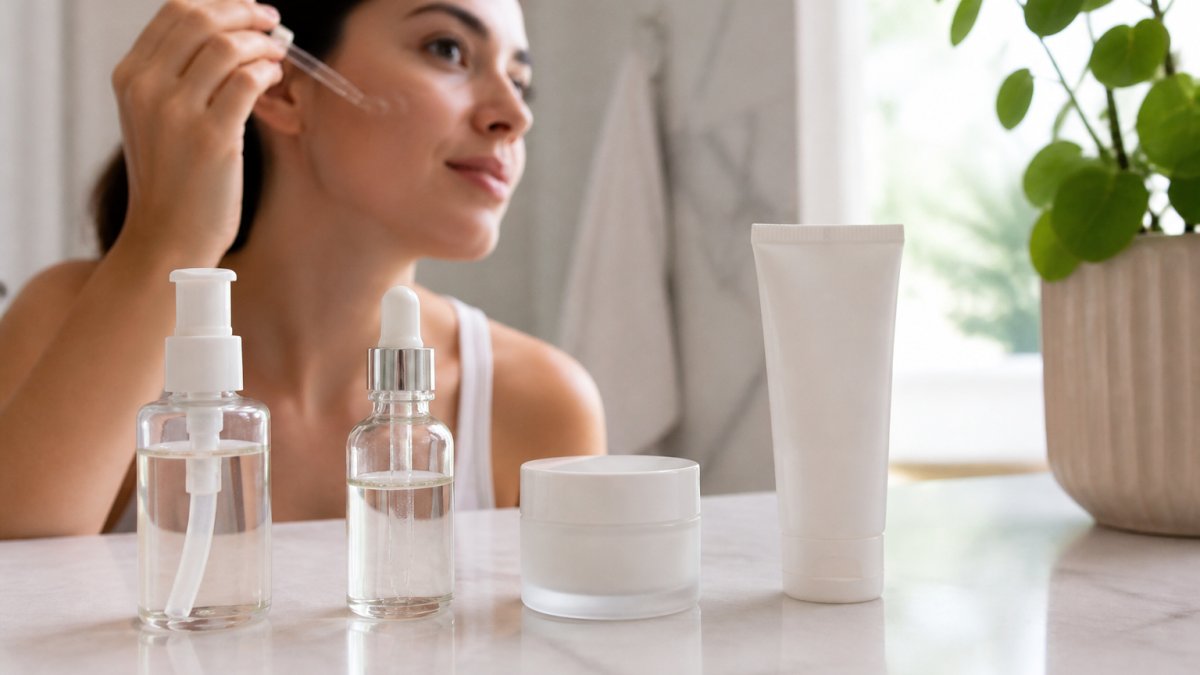
| Step | Product | When | Frequency |
|---|---|---|---|
| 1 | Cleanser | AM + PM | Daily |
| 2 | Vitamin C serum | AM | Daily |
| 3 | Retinol or peptide serum | PM | 2-3x weekly to start |
| 4 | Moisturizer | AM + PM | Daily |
| 5 | Sunscreen | AM | Daily, reapply outdoors |
Layering copper peptides with exfoliants needs care. This guide to layering copper peptides with exfoliants shows the safe order.
Step 6: How Long Does It Take to Boost Collagen? Realistic Timelines
How long does it take to boost collagen? Expect weeks, not days. Skin renewal is slow, and anyone promising overnight firmness is selling you a feeling, not a result.
- Hydration and glow: a few days to two weeks
- Smoother texture: four to eight weeks
- Firmer skin and fine lines: three to six months of consistency
For a closer look at what to expect, this week-by-week copper peptides timeline maps the stages.
Step 7: Avoid These Common Mistakes in Your Collagen Boosting Skincare Routine
The biggest mistake is doing too much at once. Stacking five actives on night one wrecks your barrier and sets you back.
Other traps:
- Skipping sunscreen and expecting serums to fix UV damage
- Using retinol every night before your skin adapts
- Expecting results in a week
- Ignoring your skin type and sensitivity
Conclusion
Building a routine that supports collagen takes patience and the right order of steps. At Vampire Tx, we made our serum to simplify that process with copper peptides, bee venom, and hyaluronic acid in one bottle, without the luxury markup. Get started with Vampire Tx and give your skin a routine it can actually stick with.
Frequently Asked Questions
What stimulates facial collagen?
Several approaches stimulate facial collagen. Topical retinoids like retinol increase collagen production by boosting cell turnover. Vitamin C supports collagen synthesis and protects against breakdown. In-office treatments such as microneedling, laser therapy, and radiofrequency create controlled injury that triggers collagen remodeling. At-home devices like red light therapy also show evidence. A consistent collagen boosting skincare routine combining these methods gives the best results.
How long does it take to see results from a collagen-focused skincare routine?
Most people see initial improvements in skin texture and hydration within 4 to 6 weeks. Visible changes in firmness and fine lines typically appear after 12 to 16 weeks of consistent use, because collagen remodeling is a slow process. Retinol results often take 12 weeks or more. Prescription retinoids may work faster but come with more irritation. Patience and daily sunscreen use are critical for maintaining progress.
Can I use vitamin C and retinol in the same skincare routine?
Yes, you can use vitamin C and retinol in the same routine, but timing matters. Apply vitamin C in the morning for antioxidant protection against UV and pollution. Use retinol at night because sunlight degrades it and increases irritation risk. If your skin is sensitive, start by using them on alternating days. Always introduce one active at a time and monitor for redness or peeling.
Can topical collagen penetrate the skin?
Topical collagen molecules are too large to penetrate the skin's surface, so applying collagen cream does not directly add collagen to your skin. Instead, look for ingredients that support your skin's own collagen production, such as retinoids, vitamin C, peptides, and copper peptides. These ingredients stimulate collagen synthesis or protect existing collagen from breakdown. Sunscreen remains the most effective way to prevent collagen loss.
