
Table of Contents
- What Copper Peptides Actually Do to Your Skin
- How Long for Copper Peptides Results: The Week-by-Week Timeline
- How to Layer Copper Peptides With Vitamin C Without Wasting Either
- The Copper Peptide Purging Period: What It Is and How Long It Lasts
- What Slows Results Down (and How to Measure Progress Objectively)
- Finding the Best Copper Peptide Serum for Aging
- Frequently Asked Questions
Last Updated: September 12, 2026
What Copper Peptides Actually Do to Your Skin
Copper peptides are short chains of amino acids bound to copper ions, and the most studied of them is GHK-Cu. This compound occurs naturally in human plasma, but its concentration in the body declines with age. When applied to skin, copper peptides results come from a straightforward mechanism: the copper ion acts as a cofactor that supports collagen synthesis, elastin production, and the skin's own repair signaling.
That is the short version. The longer version matters because it explains why timelines vary so much between people.
How Copper Peptides Work in the Skin
GHK-Cu supports fibroblast activity, the cells responsible for producing collagen and elastin in the dermal matrix. It also carries antioxidant properties that help reduce oxidative stress, one of the drivers of visible aging.
What most guides miss is that copper peptides do not "add" collagen. They signal your skin to rebuild its own. That distinction explains both the delayed timeline and the plateau many users hit around month three.
Topical vs. Injectable: Two Very Different Timelines
A topical application delivers copper peptides through the skin barrier. An injectable or subcutaneous injection bypasses that barrier entirely, which is why clinical and cosmetic settings report faster visible changes.
For at-home use, topical serums are the practical option. Bioavailability through the skin is lower, so consistency matters more than concentration alone. The FDA guidance on cosmetic versus drug claims is worth reading if you want to understand how topical anti-aging products are regulated.
How Long for Copper Peptides Results: The Week-by-Week Timeline
The honest answer to how long for copper peptides results is that most people notice hydration changes within two weeks, texture and tone shifts by week six, and firmer, more elastic skin somewhere between weeks eight and twelve. Collagen remodeling continues well past that point.
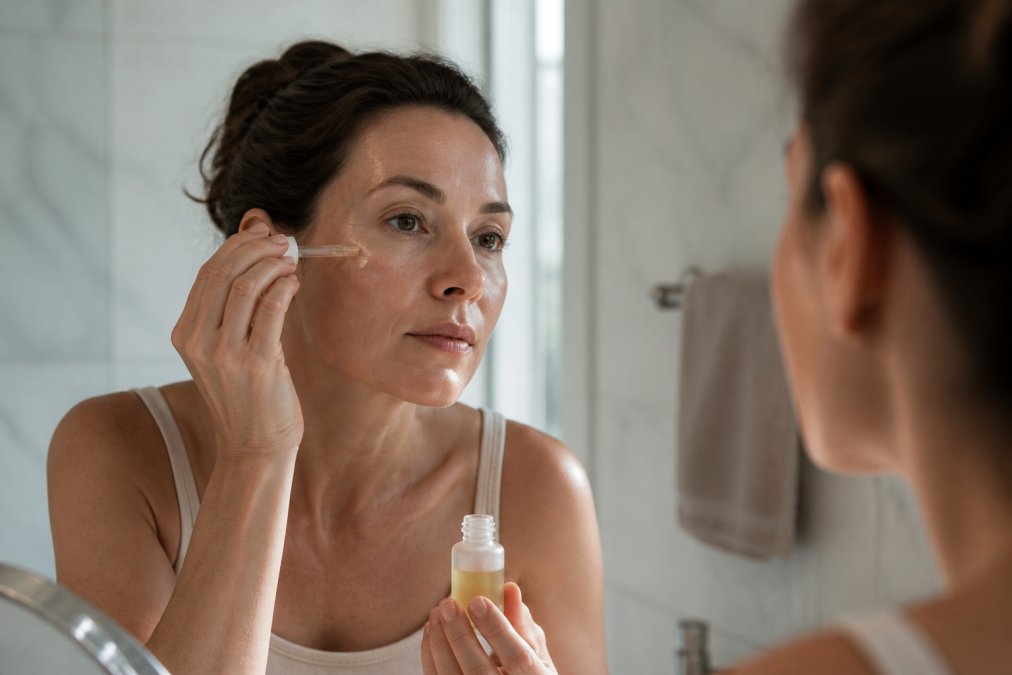
Below is the sequence most users report, mapped to what is actually happening in the skin.
Weeks 1-2: Hydration and Skin Barrier Repair
The first changes are hydration levels and skin barrier repair. These are not dramatic, and that is normal. Copper peptides support the barrier while humectants in a well-formulated serum pull water into the upper layers.
A common mistake is quitting during this phase because "nothing is happening." Something is happening. It is just not visible in a mirror yet.
Weeks 3-6: Texture, Tone, and Early Firmness
Texture and skin tone typically improve in this window. Pores look smaller, rough patches smooth out, and early visible firmness appears along the jawline and cheeks.
This is also when the purging period, if you are going to have one, tends to show up. More on that below.
Weeks 8-12: Wrinkle Reduction and Elasticity
Wrinkle reduction and measurable changes in skin elasticity land here for most consistent users. This is the phase where before-and-after comparisons start to look convincing rather than hopeful.
Months 4-6: Collagen Remodeling and Hair Density
Dermal remodeling continues for months. Some users also report changes in hair density when applying copper peptides along the hairline, tied to follicle stimulation and support during the anagen phase. Evidence for scalp use is thinner than for facial use, so treat hair claims with measured expectations.
How to Layer Copper Peptides With Vitamin C Without Wasting Either
Layering copper peptides with vitamin C is possible, but the order and timing matter. The two ingredients can interfere with each other when applied simultaneously, because vitamin C (L-ascorbic acid) works best at a low pH, typically below 3.5, while copper peptides prefer a skin-friendly, closer-to-neutral environment. At low pH, the copper ion can dissociate from its peptide chain, which is why mixing them in the same step tends to waste both.
The practical approach:
- Apply vitamin C in the morning on clean skin, then wait two to three minutes before the next step.
- Apply copper peptides at night, after cleansing.
- Never mix the two in the palm of your hand before applying.
- If your skin is reactive, alternate days rather than layering.
What Else You Should and Shouldn't Pair With Copper Peptides
Most guides stop at vitamin C. The rest of your routine matters just as much, and getting it wrong is one of the most common reasons results stall.
Retinol and retinoids. These are the trickiest pairing. Retinol accelerates cell turnover and can compromise the barrier temporarily, while copper peptides are trying to support barrier repair and collagen signaling. Many dermatologists recommend alternating nights rather than layering, and giving your skin a few weeks to adjust to one before introducing the other. If you layer them, apply the copper peptide serum first, wait, then the retinoid, or split them across nights entirely.
Niacinamide. Generally compatible. Niacinamide supports barrier function and sebum regulation, and it does not require the low pH that vitamin C does, so it can sit in the same routine as copper peptides without the timing gymnastics. A common pattern is niacinamide in the morning and copper peptides at night.
Exfoliating acids (AHA/BHA). These lower skin pH and can strip the barrier if overused, which works against the repair process copper peptides support. Keep acid use to a few nights a week and avoid applying them in the same session as your copper peptide serum.
Zinc and other trace minerals. Some evidence suggests high concentrations of competing metal ions can interfere with copper's signaling role. This is less of a concern in normal cosmetic formulas than in high-dose supplements, but it is worth knowing if you take a zinc supplement daily.
Hyaluronic acid and barrier ingredients. These are the easy wins. Hyaluronic acid, glycerin, ceramides, and panthenol all support hydration and barrier function without competing with copper peptides, which is why they show up in well-formulated copper peptide serums.
Antioxidants like vitamin E and ferulic acid. Generally fine and often beneficial, though the same low-pH caveat from vitamin C applies if they are formulated in an acidic serum.
The takeaway is that copper peptides are not fragile, but they are not indifferent to their neighbors either. A simple routine, vitamin C in the morning, copper peptides at night, acids and retinoids on alternating nights, gets you most of the benefit without the guesswork.
The Copper Peptide Purging Period: What It Is and How Long It Lasts
The copper peptide purging period is a temporary phase of increased breakouts or irritation that some users experience in the first few weeks of use. It is not universal, and it is not the same as a retinol purge.
When it happens, it usually settles within two to four weeks. If irritation persists past that, the concentration is likely too high for your skin, or another product in your routine is the real culprit. Skin type variables matter enormously here: oily and acne-prone skin tends to purge more visibly than dry or mature skin.
What Slows Results Down (and How to Measure Progress Objectively)
Inconsistent use is the single biggest factor slowing copper peptides results. Skipping nights, layering too many actives, and unprotected sun exposure all work against the repair process. But the factors that slow results are more specific than most guides admit, and the way you measure progress determines whether you actually notice the change.
The Factors That Actually Change Your Timeline
- Application frequency. Copper peptides reward daily, consistent use. Missing two or three nights a week can push the visible-results window from eight weeks to twelve or more.
- Concentration and formulation. Higher concentration is not automatically faster. A well-formulated serum at a moderate concentration often outperforms a harsh, high-dose product that irritates the barrier.
- Skin type. Oily and acne-prone skin tends to show texture changes earlier but may purge more visibly. Dry and mature skin often sees hydration and barrier improvements first, with firmness changes arriving later. Sensitive skin may need to start every other night, which extends the timeline.
- Age and baseline collagen. Younger skin with more existing collagen shows surface changes faster; older skin with more remodeling to do may take longer to see firmness gains.
- Sun exposure and lifestyle. UV exposure degrades collagen faster than copper peptides can signal repair. Smoking and poor sleep work against the same pathways.
- Routine conflicts. As covered above, stacking low-pH actives, retinoids, and exfoliating acids in the same session can slow progress by keeping the barrier in a state of low-grade irritation.
How to Measure Progress Objectively
Objective measurement tools beat guesswork. Standardized photos under the same lighting, taken every two weeks, reveal changes the mirror hides. A simple hydration meter and a consistent photo setup will tell you more than how your skin feels on any given morning.
A practical tracking setup:
- Standardized lighting. Take photos in the same spot, same time of day, same light source. Natural indirect light near a window works well; avoid overhead bathroom lighting, which exaggerates texture.
- Same angle and distance. Mark a spot on the floor or use a phone stand so your face is framed identically each time.
- No makeup, clean skin. Photograph before your morning routine, not after.
- Two-week intervals. Weekly photos are too noisy; monthly photos miss the early changes. Every two weeks is the sweet spot.
- Track more than your face. If you are using copper peptides along the hairline, photograph the same part line and hairline angle each time.
| Timeframe | What Changes | How to Measure It |
|---|---|---|
| Weeks 1-2 | Hydration, barrier repair | Hydration meter, feel test |
| Weeks 3-6 | Texture, tone, early firmness | Standardized photos, pore visibility |
| Weeks 8-12 | Wrinkles, elasticity | Side-by-side photos, skin elasticity check |
| Months 4-6 | Collagen remodeling, hair density | Photo comparison, hairline tracking |
Plateau Management: What to Do When Progress Flattens
Plateau management is the part almost nobody talks about. Around month three, progress often flattens. That is not failure; it is the point where collagen remodeling is ongoing but no longer producing visible weekly change.
What actually helps at this stage:
- Switch to maintenance frequency. Applying every other night instead of nightly keeps results without overloading the skin, and many users find the plateau breaks once the barrier is less stressed.
- Audit your routine for conflicts. A plateau is often a low-grade irritation problem in disguise. Remove exfoliating acids and retinoids for two weeks and see if progress resumes.
- Re-check your photos. Compare month three to month one, not month three to month two. The change is often there; it is just slower than the early weeks.
- Consider a short reset. Two weeks off, then restarting at a lower frequency, sometimes produces a visible response again, though this is anecdotal rather than clinically established.
- Do not chase concentration. Upgrading to a stronger serum at the plateau stage is the most common mistake. It usually produces irritation, not acceleration.
Copper peptides reward patience and consistency more than they reward concentration. The user who applies a moderate serum every night for six months will out-perform the user who chases the strongest formula and quits at week four, and the user who tracks progress with standardized photos will know the difference.
Finding the Best Copper Peptide Serum for Aging
The best copper peptide serum for aging is one that pairs GHK-Cu with supporting ingredients rather than isolating it. Synergistic ingredients matter: hyaluronic acid for hydration, and barrier-supporting compounds that let the peptides do their repair work without triggering irritation.
That is the logic behind Vampire Tx Face Serum, which combines copper peptides, hyaluronic acid, and bee venom in a single step. For anyone who wants a simplified routine, it fits the bill. The American Academy of Dermatology's guidance on anti-aging skincare is a useful reference for what a sensible routine should and should not include.

National Institutes of Health research on copper peptide wound healing
If you are coming from a retinol-based routine, expect a gentler adjustment period. Copper peptides do not cause the flaking and photosensitivity that retinoids do, which makes them easier to use year-round.
Frequently Asked Questions
How do I know if a copper peptide serum is actually working?
Track three things every two weeks: hydration (does skin feel less tight after cleansing?), texture (run a finger along your jawline), and firmness (does your cheek feel bouncier when you press it?). Photograph your face in the same light at the same time of day. Most people notice hydration changes first, around weeks 1-2, with visible firmness and tone changes following between weeks 4 and 8. If nothing has shifted by week 12 with daily use, the concentration or formulation may not be right for your skin.
What should you not mix copper peptides with?
Skip direct layering with strong acids (glycolic, lactic, salicylic) and high-dose L-ascorbic acid in the same step, since low pH can destabilize the peptide and reduce how much reaches your skin. Retinol is also best kept in a separate routine slot. If you want vitamin C, apply it in the morning and copper peptides at night, or leave 20-30 minutes between them. Niacinamide and hyaluronic acid layer fine with copper peptides.
Can you use copper peptides every day for faster results?
Yes, daily use is standard and generally well tolerated. Twice daily is fine for most skin types, though sensitive skin should start once daily for the first two weeks. Consistency matters more than frequency: five days a week for three months beats sporadic use for a year. More product does not speed up collagen synthesis. Follow the label, apply to clean skin, and give the peptide time to absorb before your moisturizer.
What are the early signs of improvement when using copper peptides?
The first signals are usually hydration and comfort: skin feels less tight after cleansing, flaking around the nose and cheeks settles, and makeup sits more smoothly. Around weeks 3-6 you may notice a more even skin tone and a slight bounce when you press your cheek. Fine lines around the eyes often soften before deeper lines do. Deeper wrinkle reduction and elasticity changes typically show between weeks 8 and 12 and continue through month six.
The frustrating part of copper peptides is that the results are real but slow, and slow results are easy to abandon. Vampire Tx built its serum around that reality: copper peptides and bee venom in one bottle, with hyaluronic acid for hydration, at a price that does not require a luxury budget. No five-step routine, no guesswork about layering. Get started with Vampire Tx and give your skin the consistent, high-performance repair it needs to lock in its prime.