
Table of Contents
- Why Retinol Demands Careful Ingredient Pairing
- Chemical Exfoliants: AHAs, BHAs, and Retinol Don't Mix
- Vitamin C and Retinol Layering: The Right Way to Combine Them
- Benzoyl Peroxide and Retinol: Understanding the Chemical Reaction
- How to Introduce Retinol Into Your Routine Safely
- How to Fix Skin Barrier Damage From Retinol Misuse
- The Wait Time Method and Ingredient Concentration Thresholds
- Frequently Asked Questions
Last Updated: September 27, 2026
Why Retinol Demands Careful Ingredient Pairing
Retinol is one of the most effective anti-aging ingredients available. It boosts collagen production, smooths fine lines, and accelerates cell turnover. But retinol is also powerful, and that power comes with a catch.
Combining retinol with incompatible ingredients risks serious irritation, redness, barrier damage, and chemical reactions that reduce effectiveness or cause painful peeling.
Most people don't realize that ingredients to avoid with retinol aren't just about being "too strong", they're about chemistry. Certain compounds destabilize retinol or amplify irritation to dangerous levels.
Chemical Exfoliants: AHAs, BHAs, and Retinol Don't Mix
Chemical exfoliants (glycolic acid, lactic acid, salicylic acid) and retinol both accelerate cell turnover. Combined, they cause excessive redness, severe flaking, barrier damage, and heightened photosensitivity. Your skin has a limit to how much change it can handle safely.
The Concentration Threshold Problem
Not all AHA and BHA products are equally risky with retinol. A 2% lactic acid toner differs fundamentally from a 10% glycolic acid peel.
Low-concentration exfoliants (under 5% AHA/BHA) can be layered with retinol using the wait time method if your skin is resilient. High-concentration peels (8%+ glycolic acid) should never be used on the same night as retinol.
The Wait Time Method: Safe Layering Without Separation
The "wait time method" allows layering with lower-concentration products and resilient skin: (1) Cleanse with pH-balanced cleanser, (2) Apply exfoliant to dry skin, (3) Wait 15-20 minutes, (4) Apply retinol, (5) Apply moisturizer. Wait time allows the exfoliant to work and skin pH to stabilize before retinol arrives, reducing simultaneous active ingredient concentration. Without it, both actives peak simultaneously, causing barrier damage.
Safest Approach: Separation by Night
For most people, especially those new to retinol or with sensitive skin, separation is safest: use chemical exfoliants 2-3 times per week and retinol on alternate nights (at least 48 hours apart). For sensitive skin, wait 72 hours between exfoliation and retinol.
Product Formulation Science: Why Some "Conflicting" Ingredients Work Together
Some products contain both retinol and mild exfoliating acids using very low concentrations, pH buffers, encapsulation technology, and stabilizing ingredients to prevent destabilization. If a product contains both, don't layer additional retinol or exfoliants, you'd exceed safe concentrations.
Vitamin C and Retinol Layering: The Right Way to Combine Them
Vitamin C and retinol are both unstable and can reduce each other's effectiveness when layered. Use Vitamin C in your morning routine and retinol at night. If using both in the same routine, apply Vitamin C first, wait 10-15 minutes, then apply retinol.
Benzoyl Peroxide and Retinol: Understanding the Chemical Reaction
Benzoyl peroxide oxidizes retinol, breaking it down before it penetrates skin and causing irritation. Use benzoyl peroxide in the morning and retinol at night. Alternatively, use benzoyl peroxide 3 times per week and retinol on other nights. If you need daily benzoyl peroxide, consult a dermatologist about timing retinol introduction.
How to Introduce Retinol Into Your Routine Safely
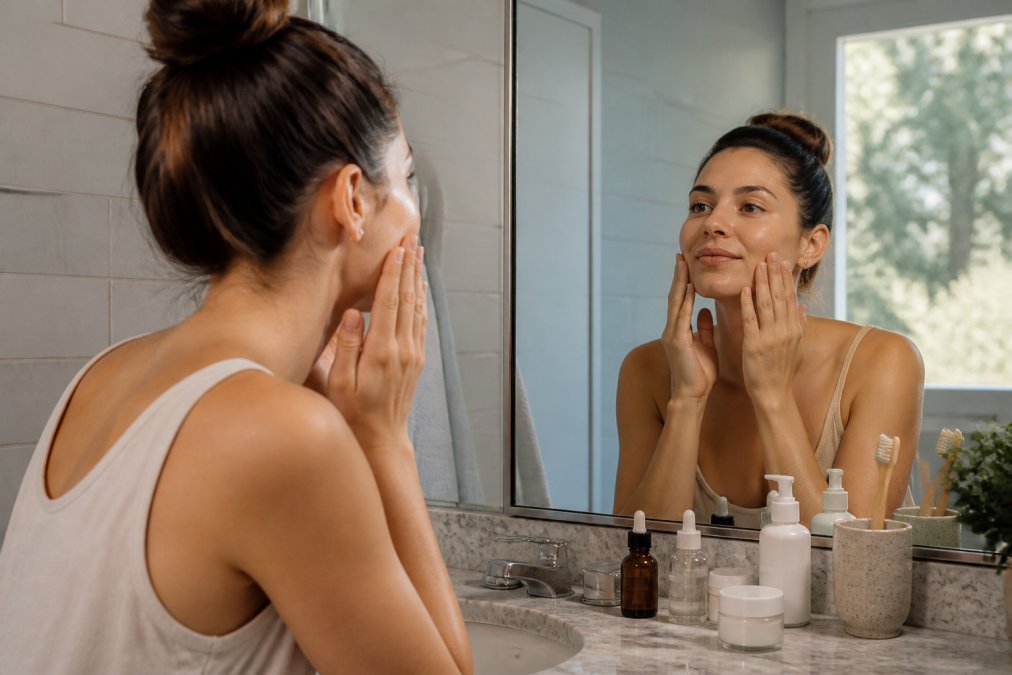
Starting retinol requires patience. Most people use it too often or at too high a strength, causing retinization (redness, flaking, irritation). Minimize this by introducing retinol slowly and choosing the right starting concentration for your skin type.
Choosing Your Starting Concentration
Retinol concentration dramatically affects adaptation speed: 0.025% (gentlest, minimal irritation), 0.03-0.05% (moderate, noticeable results in 6-8 weeks), 0.1% (stronger, higher irritation risk), retinyl palmitate/retinaldehyde (weaker precursors), and prescription retinoids (strongest, require supervision). Start with 0.025-0.03% if new to retinoids. Lower concentrations used consistently deliver better results than high concentrations used sporadically.
Introduction Timeline by Skin Type
For sensitive or reactive skin: Week 1-2: once per week. Week 3-4: once every five days. Week 5-8: twice per week (only if irritation subsides). Week 9+: increase gradually or maintain twice per week. Apply to completely dry skin; wait 20 minutes after cleansing.
For normal skin:
- Week 1-2: Use retinol once per week.
- Week 3-4: Increase to twice per week. Space applications at least three days apart.
- Week 5-6: Move to three times per week if your skin is tolerating it well.
- Week 7+: You can continue at three times per week or increase to four times per week, depending on your goals and how your skin responds.
For resilient or oily skin:
- Week 1-2: Use retinol twice per week.
- Week 3-4: Increase to three times per week.
- Week 5+: Move to four times per week or nightly use if desired, depending on the concentration.
Formulation Matters: Serum vs. Cream vs. Oil
The vehicle your retinol comes in affects absorption speed and irritation risk:
- Retinol serums: Absorb quickly, deliver faster results, but can feel more irritating. Best for oily or combination skin.
- Retinol creams: Absorb more slowly, feel less irritating, provide hydration. Better for dry or sensitive skin.
- Retinol oils: Slowest absorption, most hydrating, least irritating. Ideal for very dry or sensitive skin, but results take longer.
Support Your Skin During Retinization
Always follow retinol with a good moisturizer. Retinol can be drying, and a hydrating moisturizer protects your skin barrier. Products with hyaluronic acid, ceramides, and niacinamide work well here.
What to avoid during the first month:
- Other active ingredients (vitamin C, exfoliants, acids)
- Fragrance and essential oils
- Physical scrubs
- Harsh cleansers
- Benzoyl peroxide
Signs Your Skin Is Adapting vs. Signs You Need to Slow Down
Normal retinization (you're on track):
- Mild redness that fades within a few hours
- Light flaking or dryness
- Slight sensitivity to other products
- These symptoms peak around week 2-3 and gradually improve
Signs you need to reduce frequency:
- Intense redness that lasts all day
- Severe flaking or peeling
- Burning or stinging sensations
- Reactive skin (everything irritates it)
- Visible barrier damage (rough texture, compromised feel)
If you're experiencing the second group, reduce your retinol frequency by half. If you were using it twice per week, drop to once per week. If symptoms persist after a week at lower frequency, pause retinol entirely for 1-2 weeks and focus on barrier repair.
How to Fix Skin Barrier Damage From Retinol Misuse
If you've already overused retinol and your skin is irritated, red, or flaking excessively, your skin barrier needs repair.
- Persistent redness
- Burning or stinging sensations
- Extreme dryness
- Reactive skin (everything irritates it)
Steps to repair barrier damage:
-
Stop all active ingredients immediately. This includes retinol, vitamin C, exfoliants, and anything else active. Your skin needs a break.
-
Simplify your routine. Use only a gentle cleanser, moisturizer, and sunscreen for at least two weeks.
-
Use barrier-repair ingredients. Look for products with niacinamide, hyaluronic acid, and ceramides. These strengthen the barrier and reduce irritation.
-
Avoid hot water. Use lukewarm water for cleansing. Hot water strips oils from your skin and worsens barrier damage.
-
Skip exfoliation entirely. No physical scrubs, no chemical exfoliants. Let your skin recover.
-
Moisturize heavily. Apply moisturizer to damp skin right after cleansing. This locks in hydration.
The Wait Time Method and Ingredient Concentration Thresholds
The "wait time method" is one of the most effective ways to layer actives safely. It's simple: apply one active ingredient, wait for it to fully absorb and dry, then apply the next one.
How to use the wait time method:
| Step | Product Type | Wait Time | Why It Works |
|---|---|---|---|
| 1 | Cleanser | , | Remove dirt and oil |
| 2 | Vitamin C serum | 10-15 minutes | Allow full absorption |
| 3 | Moisturizer | 5-10 minutes | Let serum dry completely |
| 4 | Retinol | , | Apply to dry skin |
| 5 | Heavier moisturizer | , | Seal in hydration |
Frequently Asked Questions
What ingredients should never be used with retinol?
Avoid mixing retinol with AHAs (glycolic acid, lactic acid), BHAs (salicylic acid), benzoyl peroxide, and vitamin C in the same application. These active ingredients can compound irritation, increase photosensitivity, and destabilize retinol's effectiveness. High-concentration niacinamide may also cause reactive redness. Use the wait time method: apply retinol at night, and if you want to use other actives, apply them on alternate nights or mornings with proper SPF protection.
Can I use vitamin C and retinol at the same time?
Yes, but with strategy. Vitamin C (ascorbic acid) and retinol can work together, but not in the same step. Apply vitamin C serum in the morning under sunscreen, then use retinol in your evening routine. If you want to use both on the same night, wait 20 minutes between applications, starting with vitamin C on dry skin, then applying retinol. This spacing prevents oxidative stress and allows each ingredient to stabilize before the next is introduced.
How long does it take to see results from retinol, and is there an adjustment period?
Most users notice improvements in fine lines and cell turnover within 4-8 weeks of consistent use. Yes, there is an adjustment period: expect flaking, dryness, and mild redness in the first 2-4 weeks as your skin builds tolerance. Start with the lowest concentration (0.025%-0.3%) once or twice weekly, then gradually increase frequency. This phased approach minimizes irritation and allows your skin barrier to strengthen without overwhelming it.
What are signs my skin barrier is damaged from retinol?
Damaged skin barrier shows persistent redness, intense dryness, flaking that doesn't improve with moisturizer, burning sensation, reactive irritation to other products, and compromised pH balance. If you experience these signs, stop retinol immediately and focus on barrier repair: use a gentle cleanser, apply hyaluronic acid and niacinamide serums, and layer a rich moisturizer. Avoid all other active ingredients for 1-2 weeks. If irritation persists beyond two weeks, consult a dermatologist.