
Last Updated: October 25, 2026
Quick Summary
Ceramide creams are worth it for barrier repair when they pair ceramides with cholesterol and fatty acids in roughly a 1:1:1 ratio, since ceramides alone supply only one part of the barrier's lipid mix. Choose a fragrance-free formula matching your skin's texture, and expect comfort within days but visible improvement over two to four weeks.
- Ceramides make up roughly half of the fat in your skin's outer layer.
- Ceramides work best alongside cholesterol and fatty acids, often summarized as a 1:1:1 ratio.
- Pause exfoliants and retinoids first, since most damaged barriers improve by subtraction.
- Patch test new creams on your jawline for three nights before full-face use.
- Compare price by dividing cost by net ounces, since package sizes vary widely.
Table of Contents
- What Ceramide Creams Actually Do for Your Skin Barrier
- How to Repair a Damaged Skin Barrier: Signs and Realistic Timelines
- How to Read a Ceramide Cream Label: Formulation Literacy
- Choosing a Ceramide Moisturizer for Sensitive Skin
- Lightweight Gel vs. Rich Cream: Matching Texture to Skin Type
- How to Use Ceramide Cream with Retinol
- Building a Skin Barrier Repair Routine
- What to Buy, What to Skip, and How to Check the Price
- Frequently Asked Questions
What Ceramide Creams Actually Do for Your Skin Barrier
Ceramide creams are moisturizers built around ceramides, the lipids that make up roughly half of the fat in your skin's outer layer. They do not "feed" your skin so much as replace what daily life strips out.
Here is the honest version: ceramides work best in a formula that also contains cholesterol and fatty acids, in something close to the ratio found naturally in skin.
What Ceramides Are and How They Support the Barrier
Ceramides are waxy lipid molecules that sit between skin cells and hold the barrier together. Think of the outer skin layer as a brick wall: skin cells are the bricks, and ceramides are the mortar.
That is why a good ceramide cream targets two things at once: moisture retention and protection. The American Academy of Dermatology's guidance on moisturizers describes ceramides as a key component of a healthy skin barrier, particularly for dry and sensitive skin.
How Barrier Creams Help Repair or Protect the Skin
A barrier cream does two jobs. It slows water loss, and it gives the skin the lipids it needs to rebuild its protective function. Most people notice improved comfort and less tightness within days, though real structural repair takes longer.
The distinction that matters when shopping: protection is immediate, repair is cumulative. A cream feels soothing the first night. The barrier itself improves with consistent use over weeks.
How to Repair a Damaged Skin Barrier: Signs and Realistic Timelines
Repairing a damaged skin barrier means removing what is irritating it, then supporting it daily with gentle cleansing and lipid-rich moisturizing.
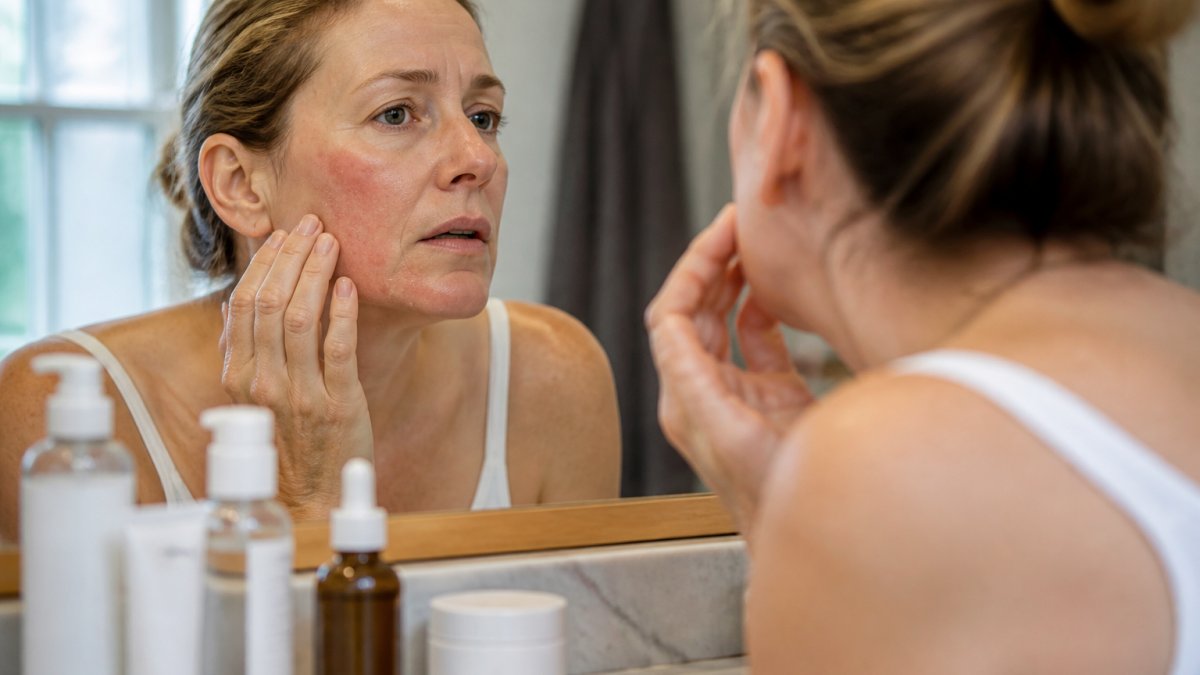
Signs your barrier is struggling:
- Stinging when you apply products that used to feel fine
- Persistent redness, tightness, or flaking
- Skin that feels dry no matter how much moisturizer you use
Watch out: the most common mistake is adding more products to fix irritation. Most damaged barriers improve by subtraction, not addition. Pause exfoliants and retinoids first, then rebuild.
How to Read a Ceramide Cream Label: Formulation Literacy
Reading a ceramide label comes down to four things: which ceramides are listed, whether the supporting lipids appear, where ceramides sit in the ingredient order, and whether the formula discloses enough to judge it. Ingredients are listed by concentration, so ceramides near the bottom mean a small amount, but that alone does not tell you whether the cream works.
Ceramide Types, Lipid Ratios, and Supporting Ingredients
Labels list ceramides by code, and the codes are not interchangeable. The ones you will see most often are ceramide NP, AP, EOP, NS, AS, and EOS.
The ratio matters as much as the roster.
Supporting ingredients worth knowing:
- Cholesterol and fatty acids: complete the lipid complex; look for cholesterol, stearic acid, linoleic acid, or shea butter's fatty-acid content
- Glycerin and hyaluronic acid: humectants that draw water into the upper layers
- Niacinamide: supports barrier lipid production and calms visible redness
A common mistake is judging a cream by ceramide count alone. Five ceramides in a thin formula with no supporting lipids underperform two ceramides in a well-built one.
What the Label Cannot Tell You
No label discloses the actual percentage of ceramides, and "ceramide complex" is a marketing term, not a regulated concentration claim. That means two creams with identical ceramide names can perform very differently depending on the base, the ratio, and the delivery format. Treat the ingredient list as a screening tool, not a guarantee. The practical test is your own skin over two to four weeks of consistent use, not the number on the front of the jar.
Choosing a Ceramide Moisturizer for Sensitive Skin
The best ceramide moisturizer for sensitive skin is fragrance-free, has a short ingredient list, and pairs ceramides with soothing ingredients like niacinamide or panthenol. Fragrance and essential oils are the most frequent triggers for irritation-prone skin.
If your skin reacts easily, patch test on your jawline for three nights before using a new cream on your whole face. Also check for drying alcohols high in the list, which undermine the moisture retention you are paying for.
People with acne-prone skin often assume rich creams will clog pores. Many ceramide formulas now come in gel-cream textures that moisturize without heaviness, so texture matters as much as ingredients.
Lightweight Gel vs. Rich Cream: Matching Texture to Skin Type
Texture should follow skin type, not preference alone. Oily and acne-prone skin usually does better with a gel moisturizer or lightweight lotion. Dry skin needs a rich cream or barrier balm with occlusive ingredients that slow water loss.
| Skin Type | Best Texture | What to Look For |
|---|---|---|
| Oily, acne-prone | Gel or gel-cream | Non-comedogenic, niacinamide |
| Combination | Lightweight lotion | Ceramides plus glycerin |
| Dry | Rich cream | Shea butter, squalane, cholesterol |
| Sensitive, reactive | Fragrance-free cream | Short list, panthenol |
| Mature, very dry | Barrier balm or overnight cream | Ceramide complex plus fatty acids |
A practical approach: use a lightweight texture in the morning under sunscreen and a richer cream at night for overnight recovery.
How to Use Ceramide Cream with Retinol
Use ceramide cream with retinol by applying the cream before and after your retinol, or by alternating nights. Ceramides buffer the irritation retinol causes without blocking its effect, which makes them a sensible pairing for anyone struggling to tolerate retinoids.
The sequence we recommend:
- Cleanse and wait until skin is fully dry
- Apply a thin layer of ceramide cream as a buffer
- Apply retinol sparingly
- Follow with another layer of ceramide cream
If you are layering several products, it helps to know the correct order for serums and creams so nothing pills or cancels out. And if you are mixing actives, review which ingredients to avoid with retinol before adding anything new to the lineup.
Building a Skin Barrier Repair Routine
A skin barrier repair routine is deliberately boring: gentle cleanser, ceramide moisturizer, sunscreen, and patience. Four steps, twice a day, beats a ten-step routine that keeps provoking the skin.
- Morning: gentle cleanser, ceramide moisturizer, broad-spectrum sunscreen
- Evening: gentle cleanser, treatment if tolerated, ceramide cream
- Weekly: no exfoliation until irritation settles
If you want a fuller template, this gentle skincare routine for sensitive skin walks through product types step by step. If you are ready to simplify, the Vampire Tx face serum pairs copper peptides and bee venom with your ceramide cream as a single age-defying step, no luxury markup attached.
What to Buy, What to Skip, and How to Check the Price
Buy a ceramide cream that lists ceramides alongside cholesterol and fatty acids, skips fragrance, and matches your skin's texture. Skip anything promising overnight transformation, and check the ingredient list before the price tag. The harder question is how to compare two creams that both pass that screen, and that is where most roundups stop short.
A Transparent Comparison Framework
Rather than rank products by brand name, compare them on the same six axes. This is the evaluation most buyers never see laid out in one place, and it is the fastest way to decide without switching between listings.
| What to Compare | Why It Matters | What a Strong Answer Looks Like |
|---|---|---|
| Ceramide types listed | More types generally cover more of the barrier's mixed-lipid structure | Several named ceramides (NP, AP, EOP, etc.) rather than a vague "complex" |
| Supporting lipids | Ceramides need cholesterol and fatty acids to function as a team | Cholesterol, stearic acid, linoleic acid, or shea butter present |
| Texture and format | Determines whether you will actually use it daily | Gel-cream for oily skin; rich cream or balm for dry skin |
| Fragrance and allergens | Fragrance is a leading trigger for reactive skin | "Fragrance-free" on the label, short ingredient list |
| Package size | A 1.7 oz jar and a 3.4 oz tube are not the same value | Net weight in ounces or milliliters printed clearly |
| Cost per ounce | The only fair way to compare price across sizes | Price divided by net ounces, do the math before buying |
How to Check the Price Fairly
Price per jar is misleading because package sizes vary widely. A cream sold in a 1.7 oz jar at one price and a 3.4 oz tube at another can differ by a factor of two in cost per ounce even when the shelf prices look close. Divide the price by the net weight in ounces before you decide. A cream you can sustain daily at a reasonable cost per ounce beats a luxury jar you ration, consistency is what repairs a barrier, and consistency depends on being able to afford to repurchase.
Packaging and Accessibility
Packaging affects both the formula's stability and your ability to use it consistently. Airless pumps and tubes protect ceramides and antioxidants from light and air better than wide-mouth jars, which expose the formula to contamination with each dip. If your skin is reactive, a tube or pump also keeps fingers out of the product. Check availability in your usual shopping channel, a cream you can repurchase locally or online without a wait is more useful than one that sells out for months.
What to Verify Before Buying
- Ceramides named individually, not hidden in a "complex"
- Cholesterol or fatty acids present
- Fragrance-free if your skin is reactive
For a deeper walkthrough on rebuilding from scratch, see our guide on how to fix skin barrier damage. If you are ready to simplify, the Vampire Tx face serum pairs copper peptides and bee venom with your ceramide cream as a single age-defying step, no luxury markup attached.
Frequently Asked Questions
Are ceramide creams safe for sensitive skin?
Yes. Ceramides are skin-identical lipids, meaning they match molecules your skin already produces, so reactions are uncommon. For sensitive skin, look for a ceramide moisturizer for sensitive skin that skips added fragrance and drying alcohol, and patch test on your jaw for two to three nights before applying it to your full face. If stinging or redness appears, stop and give your barrier a week of plain moisturizer before trying again.
Can you use ceramide cream with retinol or exfoliating acids?
You can, and it is one of the smartest ways to keep actives in your routine. Apply retinol or an acid first, wait a few minutes, then layer ceramide cream on top to cushion the barrier overnight. If your skin stings or flakes, alternate nights instead of layering. Ceramides do not cancel out retinol; they help your skin tolerate it, which matters more as you move past your 30s and cell turnover slows.
How long does it take for a damaged skin barrier to improve?
Most people notice less stinging and flaking within 7 to 14 days of consistent ceramide use plus a pause on harsh actives. Full recovery of moisture retention typically takes four to six weeks. If redness, burning, or breakouts persist past two weeks despite gentle care, see a dermatologist, since barrier damage can mimic or overlap with conditions like rosacea or eczema that need different treatment.
What is the best moisturizer with ceramides, and how much should it cost?
The best ceramide cream is the one whose label lists ceramides high enough to matter, pairs them with fatty acids and cholesterol, and fits your skin type and budget. A high price does not guarantee a better lipid complex. Check the ingredient list first, then compare cost per ounce before you commit.
Most people treat barrier repair as a product problem when it is really a consistency problem. Pick one ceramide cream that fits your skin type, use it twice a day, and stop layering actives until your skin settles. Vampire Tx was built for exactly that kind of simplicity: one serum combining copper peptides and bee venom for cellular repair, formulated to slot into a short routine without the luxury price tag. Get started with Vampire Tx and give your skin one less thing to react to.
