
Table of Contents
- What to Look for in a Budget Anti-Aging Serum
- The Best Budget Anti-Aging Serum for 2026: Vampire Tx Face Serum
- Anti-Aging Serum Ingredients That Work (and Which to Skip)
- How Long Does It Take to See Results from Anti-Aging Serum?
- How to Build an Affordable Anti-Aging Routine
-
Common Mistakes That Sabotage Your Serum Results
- Mistake 1: Skipping Sunscreen, The Single Biggest Sabotage
- Mistake 2: Layering Actives Without Understanding Contraindications
- Mistake 3: Misreading Purging as a Bad Reaction
- Mistake 4: Incorrect Sequencing That Blocks Absorption
- Mistake 5: Over-Application, More Is Not Better
- Mistake 6: Expecting Overnight Results and Quitting Too Early
- Mistake 7: Ignoring the Rest of the Routine
- The Cost of Mistakes: A Quick Calculation
- Conclusion: Start Your Routine Without Breaking the Bank
- Frequently Asked Questions
Last Updated: September 9, 2026
What to Look for in a Budget Anti-Aging Serum
Finding the best budget anti aging serum 2026 has to offer starts with understanding that price and efficacy are not the same thing. A budget anti aging serum delivers clinically-backed active ingredients at a concentration that actually works, without the luxury brand markup.
Most affordable serums fail because they stretch a single hero ingredient too thin or bury it beneath fillers. When you scan the ingredient list, you want the active compounds near the top, indicating higher concentration. Look for proven performers like retinol, vitamin C, niacinamide, and hyaluronic acid, but also pay attention to delivery systems that help these ingredients penetrate the dermal layer effectively.
A higher price tag does not guarantee better results. Mid-range formulations with a focused ingredient profile often outperform sprawling luxury cocktails. Match the serum to what your skin actually needs rather than chasing every trendy compound.
The Best Budget Anti-Aging Serum for 2026: Vampire Tx Face Serum
Our top pick for the best budget anti-aging serum in 2026 is the Vampire Tx Face Serum, priced at $19.00. This advanced facial serum fuses copper peptides (GHK-Cu), hyaluronic acid, and bee venom to target firmness, smoothness, and hydration in a single step. For that price point, you are getting a multi-action formula that replaces the need for several separate products.

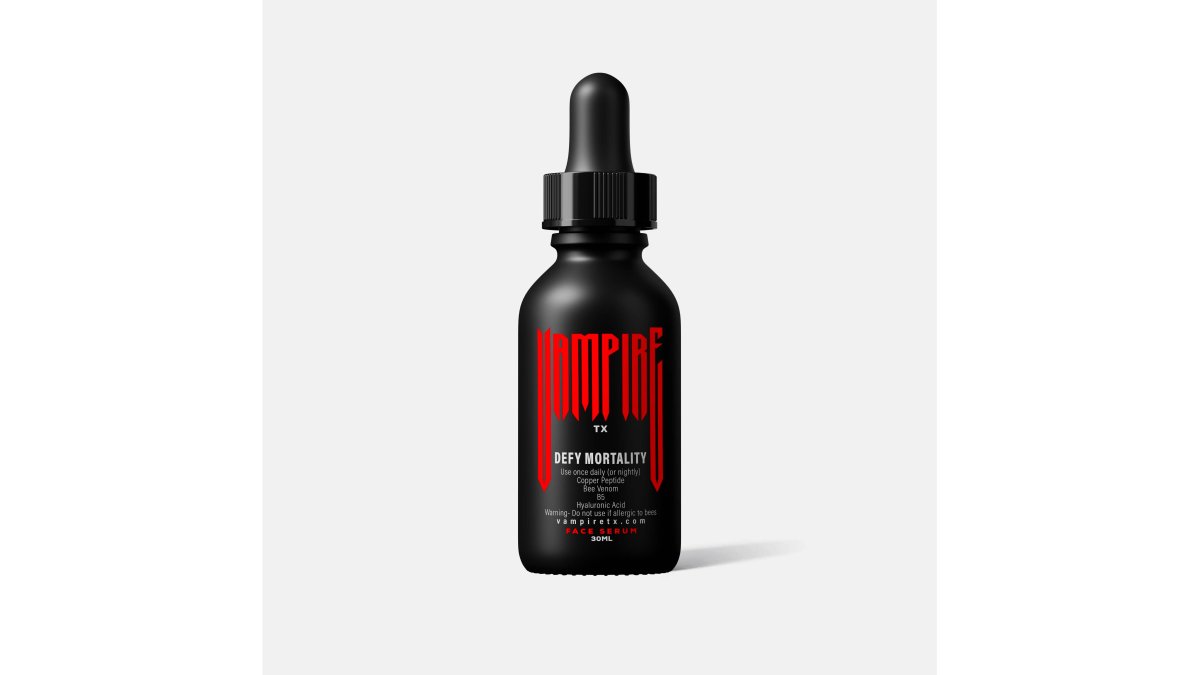
What sets this apart is ingredient synergy. Copper peptides support collagen production and elasticity, and hyaluronic acid retains moisture to plump skin and reduce fine lines.
Why Copper Peptides and Bee Venom Beat Plain Retinol
Retinol is the gold standard for anti-aging, but it causes irritation, redness, and peeling that derail consistency. Copper peptides and bee venom offer an alternative that still stimulates collagen production and cell turnover.
Copper peptide GHK-Cu signals the skin to rebuild and repair (PubMed). Together, they firm and plump.
For sensitive skin that cannot tolerate retinol, this combination improves texture and firmness while maintaining the lipid barrier.
Anti-Aging Serum Ingredients That Work (and Which to Skip)
The most effective anti-aging serum ingredients are backed by decades of research. Hyaluronic acid draws in moisture for immediate plumping. Niacinamide strengthens the barrier, reduces inflammation, and improves elasticity. Vitamin C provides antioxidant protection and brightens the complexion.
Peptide complexes, including copper peptides, signal the skin to produce more collagen, which declines with age. Prioritize serums that combine a hydrating agent with a collagen-stimulating peptide and an antioxidant.
Skip high concentrations of alcohol and artificial fragrances. Be wary of "proprietary blends" that fail to disclose concentrations, as you cannot verify effective amounts. Transparency is a hallmark of a trustworthy brand.
How Long Does It Take to See Results from Anti-Aging Serum?
Most anti-aging serums require 4 to 8 weeks of consistent use for visible changes. The skin's renewal cycle takes about 28 days, and collagen responds even more slowly (the American Academy of Dermatology). Patience is a biological requirement.
The timeline depends on what you are targeting. Hyaluronic acid plumps skin within hours. Fine lines and elasticity improve after 6 to 8 weeks as new collagen forms. Deeper wrinkles may take 3 to 6 months.
Unlike retinol, copper peptide and bee venom formulations generally do not cause purging, making daily consistency easier. Apply morning and night to clean skin.
How to Build an Affordable Anti-Aging Routine
Building an affordable anti-aging routine is about sequencing products correctly, not buying more. Budget serums fail most often because of the routine around them, not the formula.
The Core Three-Step Framework
| Routine Step | Product Type | Key Role | Frequency | Budget Range |
|---|---|---|---|---|
| Cleanse | Gentle, sulfate-free foaming cleanser | Remove impurities without stripping the acid mantle | Twice daily | $6-$12 |
| Treat | Targeted serum (peptide, retinol, or vitamin C) | Deliver active ingredients for collagen support | Twice daily (or as tolerated) | $15-$30 |
| Protect | Moisturizer with SPF 30+ | Lock in hydration and prevent UV-induced collagen breakdown | Every morning | $10-$18 |
This covers cleansing without damage, treating with actives, and protecting against photoaging. Concentrate your budget on the serum, but only if the other steps are not undermining it.
The Cost-Per-Ounce Reality Check
The real metric is cost per ounce. A $19 serum with 1.7 fl oz delivers roughly $11.18 per ounce, while a $25 serum in a 0.5 fl oz bottle costs $50 per ounce. Divide the price by fluid ounces to get the true cost. A pea-sized amount (0.01 oz) used twice daily lasts 8 to 10 weeks in a 1 fl oz bottle. If a product claims to last a month but holds only 0.3 fl oz, the value collapses.
Layering Science: What Goes On First and Why
Ingredient sequencing is chemistry. Water-based serums must go on before oils and occlusives, which block water-soluble actives. The correct order is:
- Cleanse and pat skin damp, Hydrated skin absorbs actives more efficiently.
- Apply the serum, This is the active step. Spread a pea-sized amount evenly, avoiding the eye area.
- Wait 60 to 90 seconds, This allows the serum to partially absorb before the next layer.
- Apply moisturizer with SPF, This locks in the serum and provides UV protection.
Ingredient Synergy and Contraindications
Most listicles never tell you what not to combine. Budget routines fall apart when users layer incompatible actives and then blame the serum.
- Retinol + vitamin C: Both are acidic and can destabilize each other when applied simultaneously. Use vitamin C in the morning and retinol at night, or alternate days.
- Retinol + AHAs/BHAs (glycolic, salicylic, lactic acid): This combination can strip the lipid barrier and cause peeling. If you exfoliate, do it on separate days from retinol application.
- Copper peptides + vitamin C: Some dermatological research suggests vitamin C can oxidize copper peptides, reducing their efficacy. If your serum contains copper peptides, apply it at a different time of day from your vitamin C.
- Niacinamide + pure vitamin C (ascorbic acid): At high concentrations, these can convert into a compound that causes flushing in sensitive skin. Lower concentrations (under 5%) are generally safe to layer.
The Purging vs. Irritation Distinction
Retinol-based serums may cause purging, a temporary worsening of breakouts that appears where you already have congestion and resolves within 4 to 6 weeks. Irritation appears as redness, burning, or peeling across the entire face and signals the concentration is too high or frequency too aggressive. The fix for purging is consistency; the fix for irritation is reducing frequency or diluting with moisturizer.
A Budget Routine That Costs Less Than a Single Luxury Serum
A complete routine, cleanser at $8, copper peptide serum at $19, and SPF moisturizer at $12, totals $39, less than many single luxury serums. The serum lasts roughly 8 weeks, bringing the monthly cost to about $19.50. That is the real value: a system that delivers results without the luxury markup.
When to Adjust the Routine
If skin feels tight after cleansing, switch to a cream cleanser. If the serum stings, reduce frequency to once daily. If you see no change after 8 weeks, look for a serum listing the active compound within the first five ingredients. Budget routines require adjustment based on your skin's response.
Common Mistakes That Sabotage Your Serum Results
The gap between a serum that works and one that fails is rarely the product, it is the mistakes around it. Budget shoppers often abandon an effective formula before it works, blaming price when the culprit is application error.
Mistake 1: Skipping Sunscreen, The Single Biggest Sabotage
UV exposure drives up to 80% of visible facial aging (peer-reviewed research). Applying a collagen-stimulating serum without SPF works against your investment, as UV breaks down collagen faster than any serum can rebuild it. A $19 serum without SPF is a net loss; the same serum under SPF 30+ is a net gain. Sunscreen is the foundation that makes every other product worthwhile.
Mistake 2: Layering Actives Without Understanding Contraindications
The most common error is stacking actives without knowing which combinations cancel out or cause irritation. Budget shoppers who apply several serums at once assume more actives equal more results.
- Retinol and vitamin C should not be applied simultaneously. Both are pH-dependent and can destabilize each other, reducing efficacy and increasing irritation risk. Use vitamin C in the morning and retinol at night.
- Copper peptides and vitamin C may interact, with vitamin C potentially oxidizing the peptide and reducing its collagen-signaling capacity. Separate them by at least several hours.
- Retinol and AHAs (glycolic, lactic, mandelic acid) together can strip the stratum corneum, leading to barrier damage, redness, and increased sensitivity. If you exfoliate, do it on alternate days from retinol application.
- Niacinamide and pure ascorbic acid at high concentrations can form niacin, which causes flushing in some skin types. Lower concentrations are generally safe.
Mistake 3: Misreading Purging as a Bad Reaction
Budget retinols are a common entry point, but many quit during purging, a temporary worsening of breakouts as cell turnover pushes congestion to the surface. Purging appears within 2 to 4 weeks, localized to clogged pores, and resolves within 4 to 6 weeks. Irritation appears as diffuse redness, burning, or peeling and indicates the concentration is too high or frequency too aggressive.
The fix for purging is consistency; stopping restarts the clock. The fix for irritation is reducing frequency or buffering with moisturizer first. If irritation persists after two weeks, the formulation may be unsuitable for your skin.
Mistake 4: Incorrect Sequencing That Blocks Absorption
Order matters because water-based serums cannot penetrate oil-based products. Applying oil or a heavy occlusive before your serum blocks actives from reaching the dermal layer. The correct sequence is:
- Cleanse and pat skin damp
- Apply water-based serum
- Wait 60 to 90 seconds for partial absorption
- Apply moisturizer or SPF
Applying serum to completely dry skin is another error. Slightly damp skin improves absorption by up to 20% because the stratum corneum is more permeable when hydrated, a free efficiency gain.
Mistake 5: Over-Application, More Is Not Better
Using more than a pea-sized amount does not increase results; it increases waste and can cause pilling. The skin has finite absorption capacity, and excess product sits on the surface, attracting debris and clogging pores. A pea-sized amount (0.01 oz) covers the face, and a 1 fl oz bottle lasts 8 to 10 weeks with twice-daily use. Finishing a serum in three weeks means you are tripling your cost per use.
Mistake 6: Expecting Overnight Results and Quitting Too Early
The skin's renewal cycle takes about 28 days, and collagen responds more slowly. Hydration appears within hours, but fine lines and elasticity improve after 6 to 8 weeks. Deeper wrinkles may require 3 to 6 months. The most common failure is abandoning a serum at week 3 or 4, exactly when it is about to work.
Mistake 7: Ignoring the Rest of the Routine
A serum cannot compensate for a harsh cleanser that strips the lipid barrier or a missing moisturizer. If your cleanser leaves skin tight, it is disrupting your acid mantle. If you skip moisturizer, transepidermal water loss increases and skin becomes more reactive. The serum depends on cleansing and moisturizing to create the conditions for it to work.
The Cost of Mistakes: A Quick Calculation
A $19 serum abandoned at week 3 costs $19 for zero results. Used correctly for 8 weeks, it costs roughly $2.38 per week and delivers measurable improvement. The difference is discipline, not the product.
Conclusion: Start Your Routine Without Breaking the Bank
The best budget anti aging serum 2026 delivers results through smart formulation, not expensive marketing. Focus on proven ingredients, consistent application, and daily sun protection.
At Vampire Tx, we formulated our face serum to fuse copper peptides and bee venom into a single, high-performance solution. At $19.00, it provides cellular repair and firming benefits without the luxury markup.
Get started with Vampire Tx and lock your skin in its prime. One bottle, twice daily, and a commitment to consistency is all it takes to see the difference.
Frequently Asked Questions
Do budget anti-aging serums contain effective ingredients?
Yes, but you have to read the label. Many affordable serums include proven actives like hyaluronic acid, niacinamide, and vitamin C. The key is checking the concentration and placement on the ingredient list. A truly effective budget serum, like Vampire Tx Face Serum at $19, combines copper peptides and bee venom with hyaluronic acid. These ingredients are backed by research for collagen production and firming. Avoid paying for fancy packaging or fragrance when the active ingredients are the real cost driver.
How is a copper peptide serum different from a retinol serum?
Retinol speeds up cell turnover, which can cause redness, peeling, and a purging period before skin adjusts. Copper peptides, like GHK-Cu, signal the skin to repair itself and boost collagen production without that irritation. For anyone who finds retinol too harsh, a copper peptide and bee venom serum delivers anti-aging results.
How long until I see results from an anti-aging serum?
You can expect initial hydration and plumping effects within 2 to 3 weeks of daily use. Deeper changes, such as improved firmness and reduced fine lines, take longer. Most dermatologists agree that collagen remodeling requires at least 8 to 12 weeks of consistent application. For a budget anti aging serum, consistency matters more than the price tag. Apply it morning and night to clean skin, and you will start noticing a difference in skin texture and elasticity by the three-month mark.
Can one affordable serum really address deep wrinkles?
One serum can address multiple signs of aging if it contains the right actives. Copper peptides support collagen production, which helps soften the appearance of deeper wrinkles over time. While no topical treatment erases wrinkles completely, a high-concentration serum like Vampire Tx Face Serum works to firm and plump the skin. For the best results, pair it with daily SPF to prevent further photoaging. Manage your expectations and stay consistent for 12 weeks.