
Last Updated: October 24, 2026
Quick Summary
Applying serum on damp skin helps most water-based formulas absorb faster and spread more evenly, while hydrating ingredients like hyaluronic acid bind surface moisture instead of pulling it from deeper layers. However, retinoids, exfoliating acids, and oil-based serums work better on fully dry skin because dampness can increase irritation or dilute the formula.
- Damp skin feels cool and slightly tacky, with no visible water droplets after patting dry.
- Apply hyaluronic acid, peptides, and niacinamide to damp skin for better spread and hydration.
- Apply retinoids, exfoliating acids, and oil-based serums to fully dry skin to avoid irritation.
- Follow serum with moisturizer while skin is still slightly tacky to seal in hydration.
- Patch test new serums on your inner arm for 24 to 48 hours before full use.
Table of Contents
- Why Damp Skin Changes How Your Serum Performs
- Serum on Damp or Dry Skin: Which One Wins
- The Benefits: Hydration, Spread, and Moisture Retention
- How to Apply Serum to Face in the Right Order
- Where Your Serum Fits in Skincare Routine Order
- When Damp-Skin Application Backfires
- Serum Application Mistakes That Undo the Benefits
- Shop the Serum Built for Damp-Skin Application
- Frequently Asked Questions
Why Damp Skin Changes How Your Serum Performs
Applying serum on damp skin is one of the simplest ways to get more from products you already own.
Damp skin still holds water on its surface after washing.
That matters because most serums carry water-binding ingredients. On a moist surface they have something to grab onto; on dry skin they pull moisture from deeper layers instead.
Here is the key point most guides skip: damp-skin application is not a universal rule. For a broader look at what makes a serum high-performance, see this high performance face serum guide.
What Counts as Damp Skin, Exactly
Damp skin feels cool and slightly tacky, with no visible water droplets, the stage right after you pat your face dry with a clean towel, not while your face is still dripping. Water beading on your cheeks means wet skin, not damp skin; excess water dilutes your serum and makes it slide around instead of absorbing. If your face feels tight and completely dry, you have waited too long. A simple test: press your palm against your cheek. It should feel like a just-wrung washcloth, not soaked, not dry.
Serum on Damp or Dry Skin: Which One Wins
For most water-based serums, slightly damp skin wins. For oil-based formulas and certain strong actives, dry skin is safer. The answer depends on what is in the bottle, not a blanket rule.
Here is how the two approaches compare at a glance:
| Factor | Damp Skin | Dry Skin |
|---|---|---|
| Spread and coverage | Glides easily, thin layer | Drags, can pill |
| Water-based serums | Absorbs faster, feels lighter | Sits on top, feels tacky |
| Hyaluronic acid | Draws in surface moisture | Pulls from deeper layers |
| Oil-based serums | Diluted, less effective | Absorbs properly |
| Strong actives | Can increase irritation | Slower, gentler delivery |
| Best for | Hydration-focused routines | Barrier repair, sensitive skin |
Hydration serums love damp skin; repair and active serums often prefer dry. But the ingredient is what actually decides.
Ingredient-by-Ingredient Rules
Hyaluronic acid. Apply to damp skin.
Peptides. Apply to damp skin.
Niacinamide. Apply to damp skin.
Vitamin C (L-ascorbic acid). Apply to dry skin.
Retinoids (retinol, tretinoin, adapalene). Apply to dry skin. Retinoids are the clearest exception.
Exfoliating acids (glycolic, salicylic, lactic). Apply to dry skin.
Oil-based serums and facial oils. Apply to dry skin. Water and oil do not mix.
A simple rule of thumb: if the serum is water-based and hydrating, damp skin helps.
One caveat: the idea that damp skin dramatically boosts absorption is widely repeated but rarely measured.
The Benefits: Hydration, Spread, and Moisture Retention
The real benefits of applying serums on damp skin come down to three things: better spread, better hydration, and better moisture retention, no fancy routine required, just timing.
Better hydration. Ingredients like hyaluronic acid hold water. On damp skin they bind surface moisture immediately; on dry skin they can draw moisture from deeper layers, leaving skin feeling tight.
Better moisture retention. Following serum with a moisturizer while skin is still slightly damp traps that water under an occlusive layer. Skip the moisturizer and that hydration escapes.
How Much Dampness Is Appropriate
You want a light, even film of water, not a soaked face. Pat your face with a towel once or twice after cleansing and stop while skin still feels cool. If water is still dripping, pat again; if skin already feels tight, splash a little water back on and pat once.
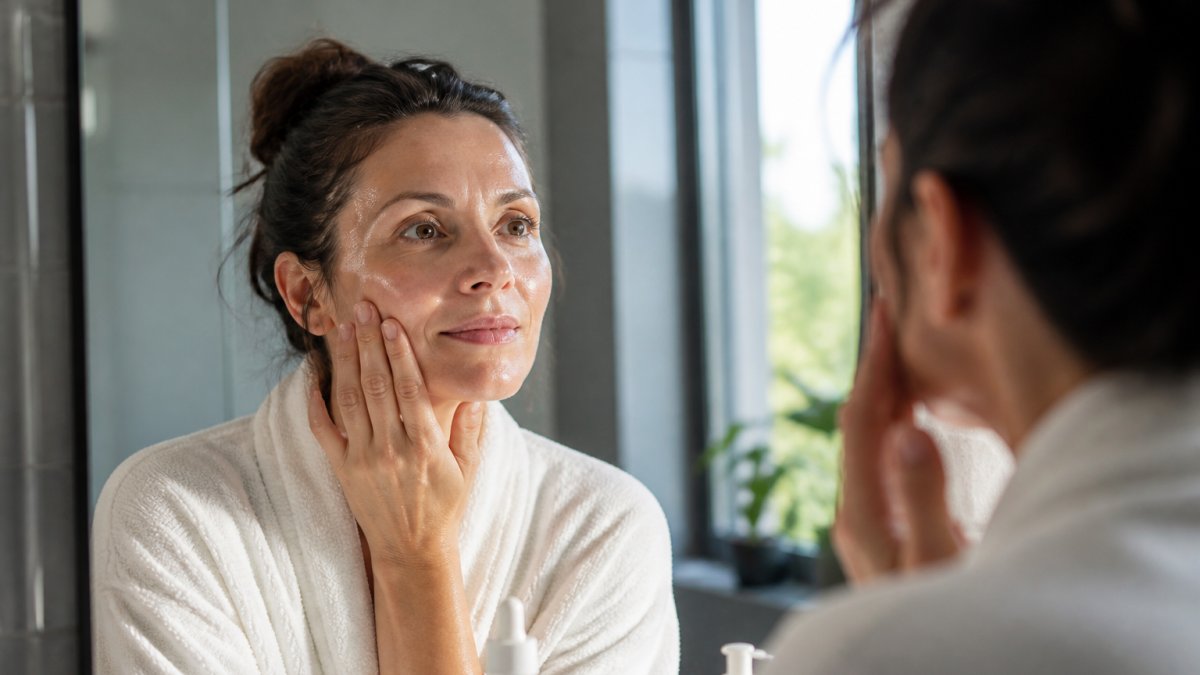
How to Apply Serum to Face in the Right Order
Applying serum to the face takes about 30 seconds, and the order matters more than the speed:
- Cleanse. Use a gentle cleanser and lukewarm water. Hot water strips moisture before you even start.
- Pat, do not rub. Press a clean towel against your face once or twice. Stop while skin is still slightly damp.
- Apply serum first. Dot a few drops across your forehead, cheeks, and chin while skin is damp.
- Press it in. Use gentle patting motions, not rubbing. Patting helps the serum settle into the skin surface.
- Follow with moisturizer. Apply while the serum is still slightly tacky to seal in hydration.
- Finish with sunscreen in the morning. Sunscreen is the last step in any daytime routine.
For a deeper walkthrough on layering multiple products, see our guide on how to layer serums correctly. It covers which formulas go first and which ones should never be mixed.
Where Your Serum Fits in Skincare Routine Order
Serum belongs after cleansing and before moisturizer, whether skin is damp or dry. What changes is how much water is on your skin when the serum goes on. The standard order:
- Cleanser
- Toner or essence, if you use one
- Serum
- Moisturizer
- Sunscreen, mornings only
If you use multiple serums, apply the thinnest, most water-based formula first, then move to thicker ones. A hyaluronic acid serum pairs well with a peptide serum, while a strong exfoliating acid should usually go on dry skin and not be layered with certain other actives without care. If you are building a routine from scratch, our tips on building a simple skincare routine can help, most people need fewer steps than they think.
When Damp-Skin Application Backfires
Damp-skin application is not right for every product, in some cases it makes irritation more likely or the formula less effective.
Strong exfoliating acids. High concentrations of glycolic or salicylic acid penetrate faster on damp skin, increasing stinging and redness, especially for sensitive skin.
Oil-based serums. Water and oil do not mix. An oil-based serum applied to damp skin gets diluted and spreads unevenly.
Retinoids. Many people find retinoids sting more on damp skin.
Sensitive or compromised skin. If your barrier is already irritated, adding water before a serum can increase stinging. Focus on barrier repair first; our guide on how to fix skin barrier damage explains the signs to watch for.
Watch out: applying a strong active to soaking-wet skin is the most common way people turn a good product into a red, stinging face.
Why Damp Skin Can Increase Irritation
Many actives are formulated at a specific pH and concentration to deliver a controlled dose. Surface water can alter how quickly the formula crosses the outer layer of skin, and faster penetration of an acid or retinoid means more sting and redness. Water is not harmful, it changes delivery speed, and some ingredients are safer at a slower speed. This is also why product labels matter: when a manufacturer says apply to dry skin, they tested the formula that way.
Sensitive Skin, Patch Testing, and Signs to Stop
If your skin is reactive, treat damp-skin application as something to test rather than assume.
Signs to stop or adjust:
- Stinging or burning that persists after the product dries
- Redness or warmth that lasts more than an hour
- New flaking, peeling, or tightness
- Itching or a rash
If any appear, switch that product to dry-skin application, reduce how often you use it, or stop entirely and focus on barrier repair. A serum that stings on damp skin may be fine on dry skin, so change one variable at a time before giving up on it.
Layering and Timing Troubleshooting
Most damp-skin problems are really layering problems. Fixes for the common ones:
- Pilling (product rolling into little balls). Usually caused by applying too much product or rubbing instead of patting. Use fewer drops, press the serum in, and wait about 30 seconds before moisturizer.
- Stinging when you layer. Apply the most acidic or active product to dry skin first, then move to hydrating layers. Do not stack an acid and a retinoid in the same routine without guidance.
- Tightness after the routine. You likely skipped moisturizer or applied it too late. Seal the serum while skin is still slightly tacky.
- Serum that never seems to absorb. Skin may be too wet, not too dry. Pat off excess water and try again with a lighter film of moisture.
The order stays the same, cleanser, serum, moisturizer, sunscreen, but how damp your skin is changes at each step: hydrating serums on damp skin, actives on dry skin, moisturizer while the serum is still tacky, sunscreen last in the morning.
Serum Application Mistakes That Undo the Benefits
Even people who know about damp-skin application get these wrong, each one quietly cancels the benefit.
- Applying to dripping-wet skin. Dilutes the serum and reduces spread. Pat dry first.
- Waiting too long after cleansing. Skin dries out in under a minute. Apply serum promptly.
- Skipping moisturizer. Without a seal, hydration escapes and skin feels tight again.
- Using too much product. More serum does not mean more results. A few drops cover the whole face.
- Rubbing instead of patting. Rubbing creates friction and can pill the formula.
- Mixing actives carelessly. Some ingredients do not layer well together. Check before combining.
- Ignoring the label. If a product says apply to dry skin, follow it. The manufacturer tested it that way.
The last one matters most: label directions win over any general rule.
Shop the Serum Built for Damp-Skin Application
Our VAMPIRE TX FACE SERUM is formulated with Copper Peptides (GHK-Cu), Hyaluronic Acid, and Bee Venom to help improve the appearance of firmness, smoothness, and hydration. It costs $19.00: high-performance ingredients without the luxury markup.
When you are ready to try it, you can shop the Vampire Tx face serum directly.

A note for sensitive skin: bee venom is an active ingredient, and some people react to it. Patch test on your inner arm first, and start with every other day. If you have a known allergy to bee products, skip this one.
Frequently Asked Questions
Do serums work better on damp skin?
For water-based formulas, yes. Applying serum on damp skin gives water-binding ingredients like hyaluronic acid surface moisture to draw from, which supports hydration and helps the product spread further. It does not make active ingredients penetrate deeper in any proven way. Formulas built on occlusives or strong acids often work fine on dry skin, so check the label before changing your routine.
How damp should your skin be before applying serum?
Slightly damp, not dripping. After cleansing, pat your face with a towel until no water runs, then apply within about a minute while the surface still feels cool and tacky. If you can see standing droplets, you are too wet and the serum will dilute and slide. If your skin already feels tight and fully dry, mist it lightly or move straight to your serum.
Can applying serum to damp skin cause irritation?
It can if the formula contains strong acids, retinoids, or high concentrations of actives, because damp skin is more permeable and can sting. Water-based hydrating and peptide serums are usually well tolerated. If you have sensitive skin or a compromised barrier, patch test first and apply actives to fully dry skin. Stop using anything that burns rather than tingles.
Should I apply moisturizer after serum?
Yes, and within about a minute while the serum is still setting. Moisturizer seals in the water your serum pulled to the surface; without it, that moisture evaporates and you can end up drier than before. In skincare routine order, serum comes before moisturizer, and sunscreen goes last in the morning.
Most skincare routines fail for a boring reason: the products are fine, but the application is sloppy. Damp-skin timing is one of the few free upgrades that costs nothing and takes no extra time. Vampire Tx built our serum to work with that step, not against it, with copper peptides, hyaluronic acid, and bee venom in one $19.00 bottle. Get started with Vampire Tx and give your serum the surface it was designed for.
