
Last Updated: November 8, 2026
Quick Summary
No, one serum cannot do everything, but one well-formulated serum can do enough for most people, most of the time. A good multi-benefit serum covers hydration, mild firming, and surface smoothing, but it won't replace a dedicated treatment for deep wrinkles, stubborn dark spots, or severe acne.
- Multi-benefit serums suit balanced skin, early fine lines, dryness, and anyone who wants fewer steps.
- Deep wrinkles, hormonal acne, significant hyperpigmentation, and texture concerns need a targeted treatment alongside your serum.
- Read the ingredient panel: actives listed near the top matter more than front-label claims.
- Apply products thinnest to thickest and wait about a minute between layers.
- Patch test on your inner forearm or behind your ear for 24 to 48 hours before full-face use.
Table of Contents
- The Honest Answer on Whether One Serum Can Do Everything
- What an All-in-One Serum Can and Cannot Cover
- How to Evaluate All-in-One Serum Claims and Concentrations
- One Serum or Several: A Decision Framework
- How to Layer Serums Correctly When You Use More Than One
- Can You Use Multiple Serums at Once Without Overloading Skin
- Can I Use Different Serums Day and Night
- How Often to Use Face Serum for Results You Can Judge
- Frequently Asked Questions
The Honest Answer on Whether One Serum Can Do Everything
No. One serum cannot do everything, and any brand telling you otherwise is selling hope, not skincare.
Customers in their thirties, forties, and fifties often ask whether they can stop juggling five bottles. The short answer is yes, if they pick the right formula and set realistic expectations.
A serum is a lightweight, fast-absorbing liquid that delivers concentrated active ingredients into the skin. It sits between cleansing and moisturizing. That's the basic definition.
The truth is more practical. A good multi-benefit serum can cover several concerns at once. But it won't replace a dedicated treatment for deep wrinkles, stubborn dark spots, or severe acne.
What an All-in-One Serum Can and Cannot Cover
An all-in-one serum handles the basics well: hydration, mild firming, and surface-level smoothing. It struggles with anything that needs high-dose actives or prescription-strength ingredients.
Where Multi-Benefit Formulas Earn Their Place
Multi-benefit serums shine for people with busy routines and generally balanced skin. A formula built around copper peptides, hyaluronic acid, and bee venom, for example, can support firmness, hydration, and smoothness in one step. That's the approach we take with our VAMPIRE TX FACE SERUM, which combines Copper Peptides (GHK-Cu), Hyaluronic Acid, and Bee Venom in a single formula at $19.00.

These formulas earn their place when:
- Your main concerns are early fine lines and dryness
- You want fewer steps and less irritation risk
- You're building a routine you'll actually stick to
- Your skin barrier is sensitive to strong actives
The Concerns a Single Serum Struggles With
Some skin issues need more firepower than one bottle can deliver:
- Deep-set wrinkles that respond best to retinoids
- Hormonal acne requiring targeted treatment
- Significant hyperpigmentation needing brightening actives
- Texture concerns that call for regular exfoliation
A single serum can support these concerns, but it rarely resolves them alone. That's not a flaw. It's chemistry.
How to Evaluate All-in-One Serum Claims and Concentrations
Ignore the marketing language and read the ingredient list. Concentration and formulation decide whether a serum works, not the label on the front.
Here's what most guides miss: an ingredient can appear on a list and still be present in a dose too small to matter. Look for these signals:
- Key actives listed near the top of the ingredient panel
- A clear, single hero ingredient rather than a long list of trace amounts
- Packaging that protects actives from light and air
- Claims that match the ingredients, not vague promises
The U.S. Food and Drug Administration's guidance on cosmetics labeling explains how ingredients must be listed, which helps you spot where actives actually rank. If a serum claims to firm and brighten but the actives sit at the bottom of the list, temper your expectations.
Watch out: "clinically proven" means little without a cited study. Ask which ingredient, at what concentration, in what test. Most brands won't answer.
One Serum or Several: A Decision Framework
Most guides tell you to layer more products. That advice assumes you want a complex routine. The better question is whether one serum can meet your actual goals, and the answer depends on four factors: your skin goals, your sensitivity, your budget, and how much routine you will realistically keep up with.
Use this framework to decide. It beats guessing, and it beats buying five bottles you'll abandon in a month.
| Your Situation | Best Choice | Why |
|---|---|---|
| Balanced skin, early fine lines | One multi-benefit serum | Covers firmness and hydration in one step |
| Sensitive or reactive skin | One gentle serum | Fewer products means fewer irritation triggers |
| Deep wrinkles or acne | One serum plus a targeted treatment | Needs a dedicated active |
| Multiple stubborn concerns | Two or three serums, layered | Each concern gets proper attention |
| New to skincare | One serum | Build tolerance before adding more |
Weighing Your Skin Goals
Start by naming your top concern. If it is early fine lines or dryness, a single serum built around peptides and hyaluronic acid can support firmness and hydration without a second step. If it is deep wrinkles, stubborn dark spots, or hormonal acne, one serum can support those concerns but rarely resolves them alone. A common pattern is to use one multi-benefit serum as the base and add a single targeted treatment for the concern that matters most.
Weighing Sensitivity
If your skin reacts easily, fewer products is not a compromise. It is the strategy. Each additional active increases the chance of irritation, and a reactive barrier does not tolerate stacking well. Start with one gentle serum, use it for several weeks, and only add a second product if your skin stays calm.
Weighing Budget
A single multi-benefit serum is usually the lower-cost path, both upfront and over time, because you are not replacing three products on different schedules. That said, a $19.00 serum and a $90.00 serum can both be reasonable choices depending on formulation. The budget question is not which costs less per bottle but which gives you the actives you need without buying products you will not finish.
Weighing Routine Complexity
Be honest about how many steps you will actually do. A two-serum routine that you skip half the time delivers less than one serum used twice daily. If your mornings are rushed, one serum under sunscreen is a complete routine. If you enjoy the process and have time at night, a morning hydrating serum and a night treatment serum is a smart split.
What One Serum Versus Several Looks Like in Practice
A one-serum routine is simple: cleanse, apply the serum, moisturize, and use sunscreen in the morning. A multi-serum routine adds a second serum and a minute between layers. The difference in effort is small, but the difference in irritation risk and cost is not. Choose the version you will keep doing.
If you're weighing one bottle against several, our guide on how to simplify your skincare routine walks through cutting steps without losing results.
How to Layer Serums Correctly When You Use More Than One
If you go the multi-serum route, order matters. Apply products from thinnest to thickest texture so each layer can absorb.
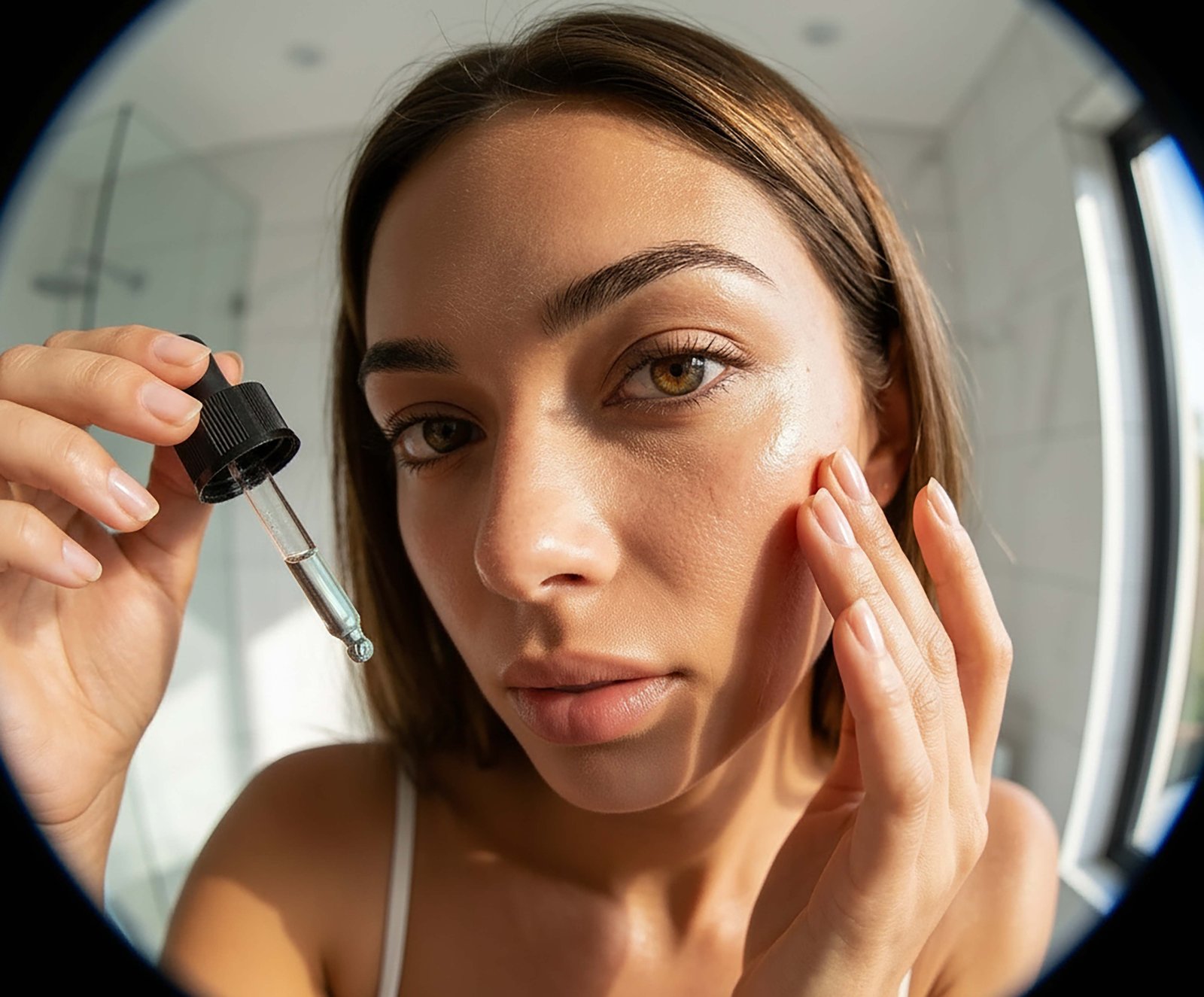
The correct order is:
- Cleanser
- Water-based serum, the runniest texture first
- Oil-based or thicker serum
- Moisturizer to seal everything in
- Sunscreen in the morning
Wait about a minute between layers. This lets each product settle before the next one goes on. For a full step-by-step breakdown, see our guide on how to layer serums correctly.
Can You Use Multiple Serums at Once Without Overloading Skin
Yes, you can use multiple serums at once, but only if you respect ingredient compatibility. Stacking too many strong actives is where routines fall apart.
The real difference between a good routine and an irritated one comes down to pairing. Some combinations work. Others fight each other or overwhelm the skin barrier.
- Safe pairs: hydrating serums with peptides, vitamin C with sunscreen
- Risky pairs: strong exfoliants with retinoids in the same layer
- Conflicts to avoid: mixing too many acids in one routine
If you're combining copper peptides with exfoliants, our guide on layering copper peptides with exfoliants safely covers the timing that keeps your barrier intact.
Can I Use Different Serums Day and Night
Yes, and this is often the smartest setup. Many people use a lighter, hydrating serum in the morning and a treatment serum at night.
A common approach is:
- Morning: antioxidant or hydrating serum under sunscreen
- Night: repair-focused serum while skin rests
This split lets you use stronger actives at night when sun sensitivity isn't a concern. It also keeps your morning routine fast, which matters if you're rushing out the door.
How Often to Use Face Serum for Results You Can Judge
Use a face serum once or twice daily, but judge results on a realistic timeline. Serums generally need several weeks of consistent use before visible change, and the timeline depends on the ingredient and the concern.
Realistic Timelines by Ingredient and Concern
Consistency beats intensity. Applying a serum twice a day for a month tells you far more than a week of heavy use. Our guide on how often to apply anti-aging face serum breaks down a realistic schedule.
How to Patch Test Before You Commit
Patch testing is the step most people skip. Apply a small amount to your inner forearm or behind your ear, leave it for 24 to 48 hours, and check for redness, itching, or swelling. If there is no reaction, test a small area of your face before applying it to your full face. This matters most with actives such as retinoids, vitamin C, and exfoliating acids.
Signs You Should Stop or Simplify
Watch out: if you notice redness, stinging, or peeling that lasts more than a few days, stop and simplify. Persistent irritation, burning, or a rash that spreads is a sign to discontinue the product and check with a dermatologist. Do not push through irritation in the hope that skin will adjust; a damaged barrier makes every other product sting.
When to Seek Professional Advice
If a concern has not improved after a few months of consistent use, or if you have severe acne, rapid changes in a mole, or a reaction that does not settle, a dermatologist can assess whether a prescription treatment is appropriate. A serum can support many concerns, but it is not a substitute for medical care.
Your skin doesn't need a cabinet full of bottles. It needs a formula that covers the essentials and a routine you'll actually follow. That's exactly what we built Vampire Tx around: Copper Peptides, Hyaluronic Acid, and Bee Venom in one advanced serum, without the luxury markup.
Frequently Asked Questions
Can one serum address all of your skin concerns?
Not every concern, but more than most people expect. An all-in-one serum can address several common goals at the same time. What it cannot do is replace a dedicated treatment for a specific diagnosis like cystic acne or melasma. If you have one dominant concern, add a targeted product alongside it rather than expecting a single bottle to solve everything.
Which two serums cannot be used together?
The classic conflict is a strong exfoliating acid with a retinoid in the same layer, since both push skin turnover and stacking them raises irritation risk. The practical fix is not banning products but separating them: use one in the morning and one at night, or alternate days. If you are unsure, patch test on your inner forearm for two nights before putting a new combination on your face.
Can you use one serum in the morning and at night?
Yes, and most simple routines are built exactly that way. A formula built around copper peptides, hyaluronic acid, and bee venom can be applied after cleansing and before moisturizer. The exception is anything with a strong active like retinol, which usually belongs at night only. Check the label instructions before assuming a serum is a twice-a-day product.
How often to use face serum if my skin is sensitive?
Start with three nights a week and add a night every week or two until you reach daily use, which gives your skin tolerance time to build. Sensitive skin often reacts to frequency faster than to the ingredient itself. If redness or stinging appears, drop back to the last comfortable frequency rather than quitting entirely.
How long should I use a serum before judging whether it works?
Give it several weeks of consistent use before judging results. Photograph your face in the same light at the start and again at week eight so you are comparing evidence rather than memory. If nothing has changed by then, the formula or the frequency is not matching your skin.
