
Table of Contents
- Anti Aging Serum vs Moisturizer for 30s Skin: What Actually Changes
- Serum vs Moisturizer: What Each One Does
- When to Apply Face Serum (and When Moisturizer Goes On)
- How to Layer Serum and Moisturizer Without Pilling
- A Simple Skincare Routine for Your 30s
- Do You Need Both? Picking the Right Combination for Your Skin
- Frequently Asked Questions
Last Updated: October 13, 2026
Anti Aging Serum vs Moisturizer for 30s Skin: What Actually Changes
Your skin starts losing collagen at roughly 1% per year after age 30, and that slow decline is why the anti aging serum vs moisturizer for 30s skin debate matters more now than it did in your twenties. The two products do completely different jobs, and most people in their thirties are using one while ignoring the other. This guide from Vampire Tx breaks down what each product actually does, when to apply face serum, and how to build a routine that fits a busy schedule. Below, we'll show you exactly how to layer both without pilling, plus the mistakes that waste money and time.

The core issue is simple: a serum delivers concentrated active ingredients, while a moisturizer seals in water and supports your skin barrier. Skip either one and you leave a gap. According to the American Academy of Dermatology's skincare guidance, a consistent routine with both hydration and targeted actives produces better visible results than either product alone.
Serum vs Moisturizer: What Each One Does
A serum is a lightweight, fast-absorbing liquid with a high concentration of active ingredients, while a moisturizer is a thicker cream or lotion designed to hydrate and seal the skin barrier. That single difference explains why they are not interchangeable.
Think of it this way: serums are the treatment, moisturizers are the protection. A serum targets specific concerns like fine lines, dullness, or uneven texture. A moisturizer keeps water from escaping your skin and shields it from daily irritants.
Serums: Concentrated Actives That Target Specific Concerns
Serums carry small molecules that penetrate deeper into the skin. Because they contain little to no occlusive ingredients, they deliver actives directly rather than sitting on the surface. Common actives include peptides, hyaluronic acid, vitamin C, and retinol.
At Vampire Tx, our face serum combines copper peptides (GHK-Cu), hyaluronic acid, and bee venom in one formula. Copper peptides, hyaluronic acid, and bee venom help improve the appearance of firmness, smoothness, and hydration.
Moisturizers: Barrier Support and Water Retention
Moisturizers use emollients and occlusives to trap water in the skin and reinforce the barrier. They rarely contain high concentrations of actives because their job is protection, not treatment.
A good moisturizer prevents transepidermal water loss, the process where moisture evaporates from your skin throughout the day. Without it, even the best serum loses effectiveness.
| Feature | Serum | Moisturizer |
|---|---|---|
| Primary job | Deliver concentrated actives | Hydrate and seal the barrier |
| Texture | Lightweight, watery | Cream or lotion |
| Apply when | First, on clean skin | After serum absorbs |
| Best for | Fine lines, dullness, texture | Dryness, sensitivity, barrier repair |
When to Apply Face Serum (and When Moisturizer Goes On)
The rule is simple: serum first, moisturizer second. Apply face serum to clean, slightly damp skin, wait about 60 seconds for it to absorb, then follow with moisturizer to lock everything in.
Order matters because moisturizer creates a seal. If you apply it first, your serum cannot penetrate, and you waste the active ingredients you paid for.
Here is the sequence most dermatologists recommend:
- Cleanser
- Toner (optional)
- Serum
- Moisturizer
- Sunscreen (morning only)
Morning and evening routines can use the same order. Some actives, like retinol, work best at night, while vitamin C suits mornings. Check the U.S. Food and Drug Administration's cosmetics information if you are unsure how a specific ingredient should be used.
How to Layer Serum and Moisturizer Without Pilling
Pilling happens when products ball up and flake off your skin, and it almost always comes down to timing and quantity. The fix is thinner layers, more wait time, and less product overall.
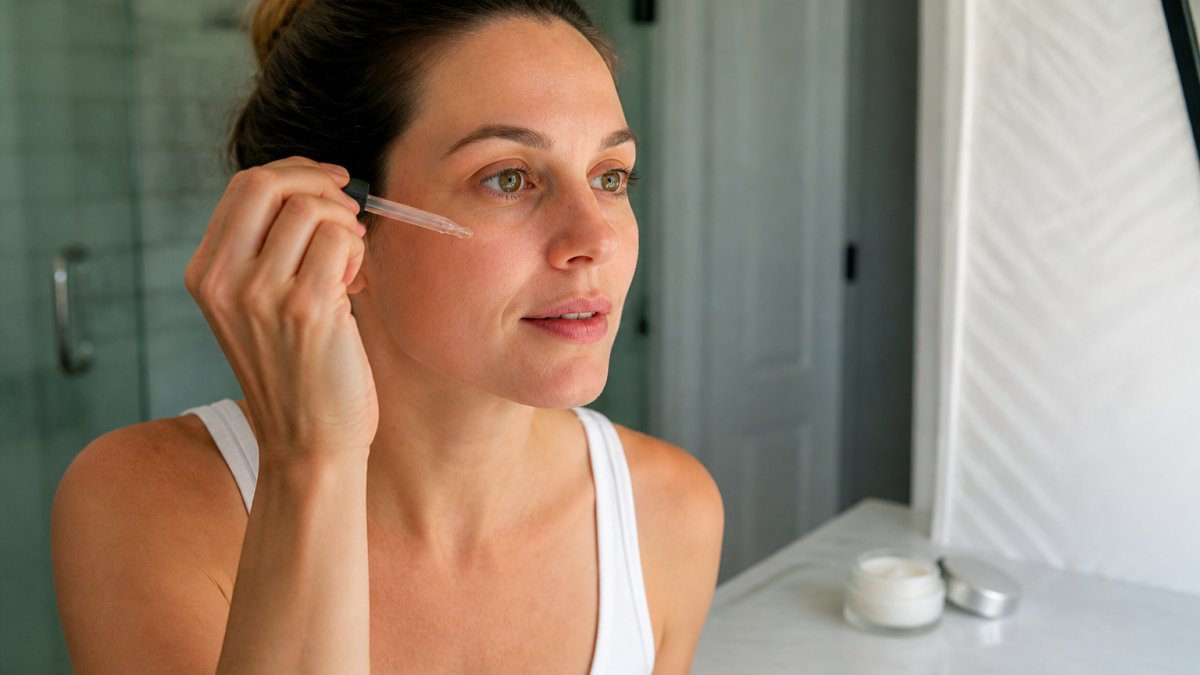
A common mistake is applying serum to dry skin and immediately slapping moisturizer on top. The two never bind, and the cream drags the serum into little rolls.
Try this instead:
- Apply serum to damp skin and pat, don't rub
- Wait 60 to 90 seconds before the next step
- Use a pea-sized amount of moisturizer, not a scoop
- Press the moisturizer in with your palms rather than sweeping
A Simple Skincare Routine for Your 30s
A skincare routine for your 30s should focus on prevention, hydration, and consistency. You do not need ten steps. You need the right four or five, done daily.
Your thirties bring the first visible signs of aging: finer lines around the eyes, slower cell turnover, and drier patches. A simplified routine that hits these targets beats a complicated one you abandon after two weeks.
Here is a practical framework:
- Morning: gentle cleanser, serum, moisturizer, sunscreen
- Evening: cleanser, serum, moisturizer
- Weekly: one exfoliating treatment, no more
If you want to simplify further, a single multi-active serum can replace two or three single-ingredient products. That is the approach we take at Vampire Tx, where one serum combines peptides, hydration, and firming actives rather than selling you three separate bottles.
Do You Need Both? Picking the Right Combination for Your Skin
For most people in their thirties, yes, you need both a serum and a moisturizer. They solve different problems, and one cannot replace the other.
The exception is oily or acne-prone skin, where a lightweight gel moisturizer may be enough alongside a serum. If your skin is very dry, you may want a richer cream at night and a lighter one in the morning.
Match your combination to your main concern:
- Fine lines and firmness: peptide serum plus a basic moisturizer
- Dryness and flaking: hydrating serum plus a barrier cream
- Dullness: vitamin C serum plus a light moisturizer with SPF in the morning
If you are weighing whether to buy one product or two, start with the serum. It carries the actives that actually change how your skin looks over time. Add a moisturizer you enjoy using, because you will apply it twice a day.
Our Vampire Tx face serum is built for exactly this: one bottle that handles firmness, smoothness, and hydration so you can pair it with any moisturizer you already trust. It costs $19, which keeps a high-performance routine affordable. You can see the full ingredient breakdown on the National Center for Biotechnology Information's research database if you want to check how copper peptides work.
Frequently Asked Questions
Is serum or moisturizer better for anti-aging in your 30s?
They do different jobs, so neither replaces the other. Serums carry concentrated actives like copper peptides and hyaluronic acid that target firmness and fine lines, while moisturizers seal in water and support the skin barrier. In your 30s, collagen production starts to slow, so a serum with proven actives does more for visible aging, and a moisturizer keeps that serum working without irritation.
Should you apply serum or moisturizer first?
Serum always goes first, on clean, slightly damp skin. Its thinner texture lets actives absorb before anything sits on top. Wait about 30 to 60 seconds, then apply moisturizer to lock in hydration. If you reverse the order, the moisturizer blocks the serum from reaching the skin, and you lose most of the benefit you paid for.
Can a serum replace moisturizer?
No. A serum can hydrate and deliver actives, but it does not form the occlusive layer that stops water from evaporating off your skin. Skip moisturizer and you may see tightness, flaking, or a compromised barrier within a week or two, especially in winter or air-conditioned rooms. Use both, or pick a serum with hyaluronic acid and follow it with a light moisturizer.
How long does it take for an anti-aging serum to work?
Hydration and glow can show up within a few days. Firmness, fine lines, and texture changes typically take 8 to 12 weeks of consistent use, since skin cell turnover runs on roughly a 28-day cycle. Take a photo in the same lighting every two weeks so you can judge progress honestly instead of guessing from memory.
Building a routine for your thirties does not require a cabinet full of products or a luxury budget. It requires understanding that serums treat and moisturizers protect, then applying them in the right order every day. Vampire Tx makes that easier with a single face serum that fuses copper peptides, hyaluronic acid, and bee venom to support firmness, smoothness, and hydration in one step. Shop now and lock your skin in its prime.