
Table of Contents
- Why You Might Switch From Retinol to Peptides
- How Long to Wait Between Stopping Retinol and Starting Peptides
- What to Use After Retinol: Filling the Gap in Your Routine
- Can You Use Retinol and Peptides Together?
- Building a Simple Skincare Routine for Beginners After the Switch
- Common Mistakes When Transitioning From Retinol to Peptides
- Conclusion
- Frequently Asked Questions
Last Updated: October 12, 2026
Why You Might Switch From Retinol to Peptides
Retinol has been the gold standard for anti-aging for decades. But it comes with a price: redness, peeling, and a weeks-long adjustment period that many people never push through. If you're tired of the irritation cycle, learning how to transition from retinol to peptides is a smart move. This guide from Vampire Tx walks you through every step.

Peptides are short chains of amino acids that signal your skin to build more collagen. Unlike retinol, they don't force rapid cell turnover. That means far less irritation.
Retinol Irritation vs. Peptide Tolerance
Retinol works by speeding up cell turnover. That's why it causes flaking and stinging, especially in the first month. Peptides work differently. They support your skin's own repair process without stripping the surface.
According to the American Academy of Dermatology's guidance on retinoid use, irritation is the most common reason people abandon retinoids. Peptides rarely trigger that reaction.
Most people tolerate peptides from day one. No purge. No peeling.
How Long to Wait Between Stopping Retinol and Starting Peptides
Wait 3 to 7 days after your last retinol application before starting peptides. This gives your skin barrier time to recover. If you had heavy peeling or redness, wait closer to 7 to 10 days.
Here's a simple rule:
- Mild irritation: wait 3 days
- Moderate flaking: wait 5 to 7 days
- Severe reaction: wait 10 days, then patch test
The exact window depends on how long you used retinol and at what strength. Someone coming off a low-dose retinol for a few weeks will bounce back faster than someone who used prescription-strength tretinoin for years.
During the wait, keep your routine boring. Cleanser, moisturizer, sunscreen. Nothing active.
What to Use After Retinol: Filling the Gap in Your Routine
The biggest question people ask is what to use after retinol. The answer: peptides, plus a solid moisturizer and sun protection. Peptides take over the collagen-signaling job without the irritation.
Your post-retinol routine should include:
- A gentle, non-foaming cleanser
- A peptide serum, like our Vampire Tx Face Serum
- A barrier-repair moisturizer with ceramides
- Mineral or chemical sunscreen every morning
Copper peptides are especially worth a look. They support firmness and smoothness over time. Our Vampire Tx Face Serum pairs copper peptides with bee venom and hyaluronic acid in one bottle. At $19, it offers a simplified, all-in-one skincare solution.
That simplicity matters. A short routine is easier to stick with, and consistency is what actually delivers results.
Can You Use Retinol and Peptides Together?
Yes, you can use retinol and peptides together, but timing and layering matter. Many dermatologists recommend peptides in the morning and retinol at night. This keeps the two from competing for your skin's attention.
If you want both in one evening routine, apply peptides first, wait a few minutes, then apply retinol. The peptide layer acts as a buffer.
How to Layer Them Without Overloading Your Skin
Layering two actives can overwhelm your barrier. Follow this order:
- Cleanse and pat dry
- Apply peptide serum to damp skin
- Wait 2 to 3 minutes
- Apply a pea-sized amount of retinol
- Seal with moisturizer
Start with this combo twice a week. Build up only if your skin stays calm.
Building a Simple Skincare Routine for Beginners After the Switch
A simple skincare routine for beginners has four steps: cleanse, treat, moisturize, protect. That's it. You don't need ten products to get results.
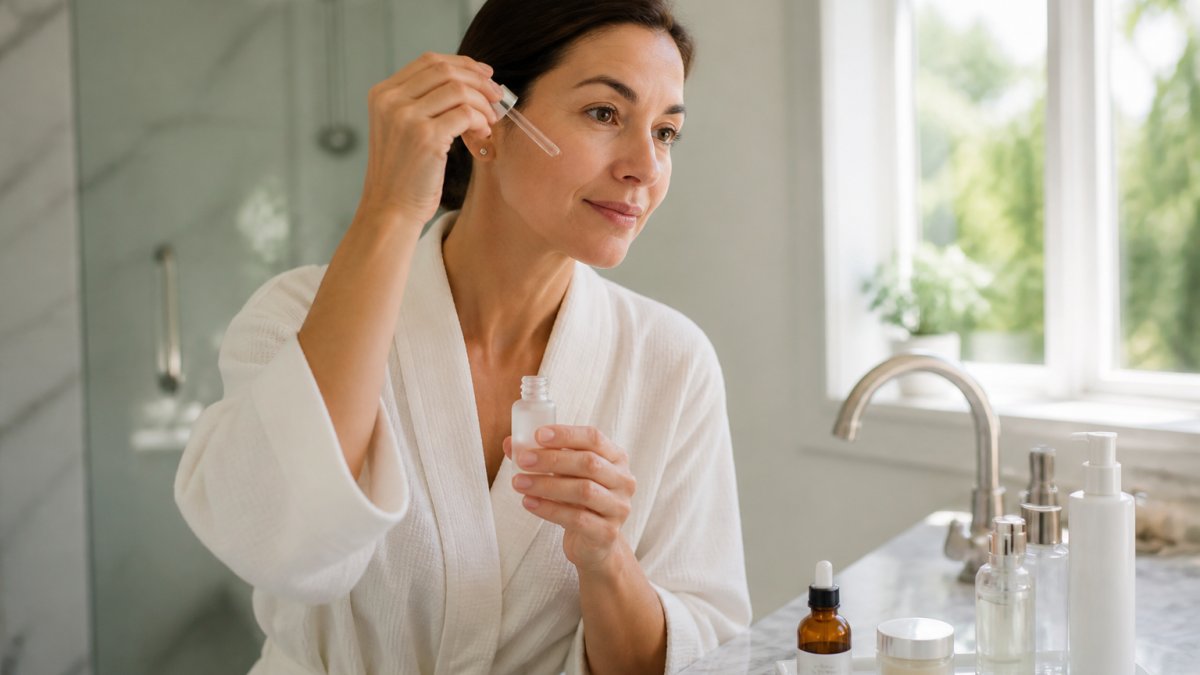
Here's a routine you can start tonight:
- Morning: Rinse with water, apply peptide serum, moisturize, apply SPF 30+
- Evening: Cleanse gently, apply peptide serum, moisturize
- Weekly: Add one exfoliating night if your skin tolerates it
That's a full anti-aging routine in under three minutes a day. No complicated steps. No guessing.
Common Mistakes When Transitioning From Retinol to Peptides
The biggest mistake is quitting retinol cold turkey and slamming your skin with new actives the next day. Your barrier is already compromised. Give it time.
Other mistakes we see often:
- Skipping sunscreen because "peptides aren't harsh"
- Using too many new products at once
- Expecting overnight results
- Buying five serums instead of one good one
Peptides work gradually. Most people notice smoother texture in a few weeks. Firmness and fine-line improvements take longer, often two to three months of daily use.
Conclusion
Switching from retinol to peptides doesn't have to be complicated. Wait a few days, keep your routine simple, and let peptides do their quiet work. The payoff is smoother skin without the redness and peeling.
At Vampire Tx, we built our Face Serum for exactly this moment. It combines copper peptides, bee venom, and hyaluronic acid in one $19 bottle. No luxury markup. No ten-step routine. Just one product that helps you defy aging and lock your skin in its prime. Shop now and make the switch simple.
Frequently Asked Questions
How long should you wait between stopping retinol and starting peptides?
Wait 3 to 7 days after your last retinol application before introducing peptides. This gives your skin barrier time to recover from retinol's exfoliating effects. If you had significant peeling or redness, extend the wait to 10 to 14 days. During the break, stick to a gentle cleanser and moisturizer. Once your skin feels calm and no longer stings when you apply basic products, you can start peptides.
Can you use retinol and peptides together in the same routine?
Yes, they can work together, but timing matters. Apply peptides in the morning and retinol at night, or use them on alternating evenings. Some people layer peptides first, wait a few minutes, then apply retinol. This approach lets you get retinol's cell-turnover benefits alongside peptides' firming and hydrating support. If your skin is sensitive, alternate nights rather than layering both in one session.
What should you use after stopping retinol?
After stopping retinol, focus on barrier repair and hydration. Use a gentle, non-foaming cleanser, a hydrating serum with peptides or hyaluronic acid, and a ceramide-rich moisturizer. Peptides are a strong choice because they support firmness and smoothness without the irritation retinol can cause. A product like Vampire Tx Face Serum combines copper peptides, hyaluronic acid, and bee venom in one step, which keeps things simple while your skin adjusts.
Can peptides help with skin irritation from retinol?
Peptides can support skin recovery after retinol use. Copper peptides, in particular, are studied for their role in wound healing and collagen support. They help the skin look firmer and smoother while it rebuilds its barrier. If you are dealing with retinol irritation, switching to a peptide-focused routine for a few weeks can give your skin a break while still addressing signs of aging. Once your skin calms down, you can reintroduce retinol if you want.